Phubbing — a blend of phone and snubbing — is the habit of glancing at your phone while you’re with someone, and it quietly erodes relationships because it signals, over and over, that whoever is on the screen matters more than the person in the room. A growing body of research links perceived partner phubbing to lower relationship satisfaction, more conflict, and a stronger sense of feeling ignored — and, tellingly, even a phone lying face-down on the table can lower how connected two people feel in conversation. The encouraging part: phubbing is a habit loop, not a character flaw, so you fix it with structure — phone-free meals, a phone-free bedroom, and clear rules you both agree on — not with willpower.
What exactly is phubbing?
The word “phubbing” was coined around 2012–2013, popularised through a “Stop Phubbing” campaign connected to Australia’s Macquarie Dictionary. It names something everyone had felt but had no label for: being with someone who is really somewhere else, on a screen.
Academics later split it into two useful ideas. Phubbing is the general act — snubbing anyone in your physical company for your phone. Partner phubbing, sometimes written “Pphubbing,” is doing it specifically to a romantic partner, and it’s the form researchers Roberts and David examined in their widely cited work on how phones intrude on couples.

One of the most striking findings in this area is the so-called “iPhone effect,” reported by Misra and colleagues: simply having a phone visible on the table during a conversation reduced how close and satisfied the two people felt — even when nobody touched it. Przybylski and Weinstein found something similar in a lab setting. The effect size varies by study, but the direction is consistent: a phone in view divides attention before it buzzes.
How does phubbing hurt a relationship?
The harm is rarely one dramatic moment but the accumulation of small snubs that add up to a message: you have my body but not my attention. Being on the receiving end triggers social exclusion, and repeated exclusion is what erodes closeness.
Here’s why the two sides experience it so differently:
| The person on the phone | The partner being phubbed | |
|---|---|---|
| What it feels like | A harmless two-second glance | A repeated signal of being second to a screen |
| What they notice | The message they answered | The eye contact that never came back |
| The story they tell | ”I’m still listening" | "They’d rather be anywhere else” |
| Over time | Barely remembers doing it | Lower satisfaction, more conflict, more distance |
Studies on partner phubbing generally find that the perception of being phubbed — not the raw minutes of phone use — predicts lower relationship satisfaction and more conflict about phones, and in some research it’s associated with lower mood over time. The mechanism is intuitive: feeling ignored by the person who’s supposed to have your back is a small wound, and small wounds that repeat every evening don’t heal.
Why do we phub the people we love?
Almost nobody phubs on purpose. It’s a reflex built by design. Every notification is a variable reward, and your hand reaches for the phone before you consciously decide to — the same pull behind why you can’t stop checking your phone. The buzz arrives, attention snaps to it, and the partner in front of you goes momentarily invisible.
Two forces keep the loop running:
- Notifications as interruptions. The steady drip of pings — from apps engineered to pull you back — means the phone is constantly asking to be checked. Cutting that notification overload removes most of the triggers that make you glance mid-sentence.
- The phone’s mere presence. You don’t need a notification at all. A phone within reach is a standing invitation; your attention keeps a background tab open on it. This is the same reason a phone simply sitting in the room drains focus even when it’s silent.
This reframes the problem: your partner isn’t being snubbed because you don’t care — you’re being hijacked by a device that’s very good at its job. So the fix isn’t trying harder to care; it’s changing the setup so the hijack can’t happen.
How do I stop phubbing? Rules that actually work
Because phubbing is environmental, changing your environment beats relying on willpower. These are the highest-leverage moves, roughly in order:
- Make meals phone-free. No phones at the table — not face-down, not silent, not “just checking the score.” Face-down still counts; remember the phone doesn’t need to buzz to divide attention. A basket or drawer for phones during dinner makes it automatic.
- Keep phones out of the bedroom. Charge them in the kitchen or hallway. It protects connection and sleep, and removes the late-night scroll that so often replaces conversation before bed.
- Agree on reply windows. Decide together that messages get answered in batches — say, after dinner — not the instant they land, so “not replying right now” stops feeling like neglect.
- Set shared rules, not personal policing. The rule should apply to both of you equally. Phubbing conversations go badly when one person feels managed; they go well when you’re both agreeing to protect the same thing.
- Name it kindly in the moment. A light “let’s both put these down” works far better than a sigh or an accusation. You’re teammates against a habit, not opponents.
“We didn’t realise how bad it had gotten until we tried a no-phones-at-dinner rule for a week. The first two nights were almost awkward — we’d actually run out of small talk. By the end of the week we were talking about real things again. The phones weren’t the problem exactly, but they were quietly eating the time we used to spend on each other.”
— Marcus, dad of two, 38
Try one rule, not all five. Phone-free meals alone tends to change a relationship’s emotional temperature faster than couples expect — dinner is where phubbing does its quietest damage.
How can Unscrol help you stay off your phone together?
You can do much of this free with tools already on your iPhone. Apple’s built-in Focus modes and Downtime can silence apps during dinner, and the most effective move — putting the phone in another room — costs nothing. Start there; no app is required to reclaim a phone-free meal.
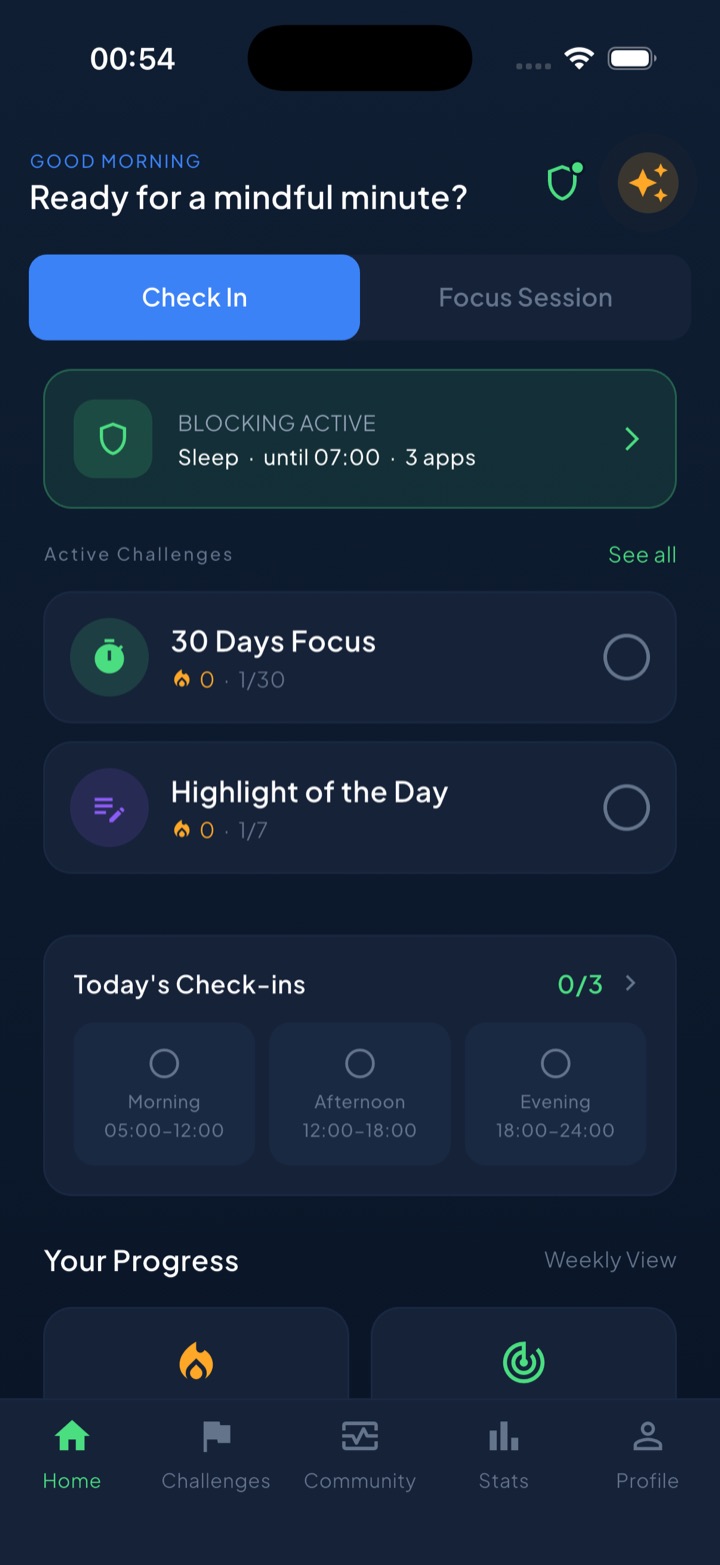
Unscrol is for when you want that to happen consistently, on a schedule, without deciding every night. It’s an iPhone app that uses Apple’s official Screen Time frameworks to actually shield the tempting apps — real system-enforced blocks, not overlay reminders you can swipe away.
The features that fit couples specifically:
- Scheduled evening blocks. Set a recurring routine — say, phones off social and entertainment from 7 to 9 pm — so the shield goes up automatically at family time. A short “take a break” bypass covers the moment you genuinely need to look something up — a deliberate middle ground, not a lockbox you’ll resent.
- Do a challenge together. Unscrol’s daily streak counts when you check in or complete a challenge, so a couple can run the same challenge side by side and keep each other honest — turning “put your phone down” into a shared game instead of nagging.
None of this replaces the conversation; it just makes the good habit the default. The phone was never more important than the person across the table — the setup just made it easy to forget. Change the setup, and you remember.
Frequently asked questions
What is phubbing?
Phubbing is a blend of 'phone' and 'snubbing': the habit of looking at your phone while you're with another person, effectively snubbing them for the screen. The word was popularised around 2012–2013 through a campaign tied to Australia's Macquarie Dictionary. It ranges from a quick glance at a notification mid-conversation to scrolling through a whole meal. Researchers use the narrower term 'partner phubbing' (Pphubbing) for doing it to a romantic partner, which is the version most strongly linked to relationship strain.
How does phubbing affect relationships?
A growing body of research links perceived partner phubbing to lower relationship satisfaction, more frequent conflict, and a stronger sense of feeling ignored or unimportant. The effect is often indirect: being phubbed makes people feel excluded, which chips away at closeness and, in some studies, tracks with lower mood over time. Notably, even a phone sitting face-down on the table can reduce how connected two people feel in conversation, without anyone actively using it. The damage comes from divided attention, not any single message.
How do I stop phubbing my partner?
Treat it as a habit to redesign, not a willpower test. Create phone-free zones and times: no phones at meals and none in the bedroom are the two highest-leverage rules. Agree on them together so it's a shared standard, not one person policing the other. Set 'reply windows' so messages get answered in batches instead of instantly. Physically remove the cue by parking phones in another room or a basket by the door. Naming it kindly in the moment — 'let's both put these away' — works better than blame.