You stop playing video games so much not by quitting, but by playing on purpose instead of by default. Three moves do most of the work: decide the session’s end before you press start (a time box), stop at a natural stopping point the game itself offers — end of the match, a save point, dailies done — and add friction between you and “one more game”: log out, unplug, and block the apps that pull you back in. Gaming is a legitimate hobby. The target here is control, not abstinence — cutting the autopilot hours while keeping the hours you actually enjoy.

Why is it so hard to stop playing?
Because you’re not fighting your willpower — you’re fighting professional design. Modern games are built by teams whose job is retention, and they lean on the same machinery that makes feeds so sticky (we break that down in dopamine and social media):
- Variable rewards. Loot drops, gacha pulls, ranked results, that one insane clutch round — you never know which game delivers the hit, so your brain keeps pulling the lever. It’s the slot-machine schedule, and it’s the most compulsive reward pattern known.
- Progress loops that never close. Quests chain into quests. Battle passes expire. Daily login rewards convert “I want to play” into “I have to play, or I lose progress.” Sunk progress is the hook: the more you’ve built, the harder walking away feels.
- No natural endings. A book ends. A film ends. A live-service game is explicitly designed not to. Matchmaking re-queues you in one click, and the menu screen is engineered to make stopping the effortful choice.
- Social obligation. The strongest hook isn’t code — it’s people. Your duo needs you for ranked. The raid needs a healer. Leaving the lobby feels like letting friends down, so you stay for “one more” that becomes four.
None of this means games are evil. It means “just play less” is a plan that ignores the opponent.
Is your gaming actually a problem?
Let’s be honest in both directions. Gaming is a real hobby — it builds skill, carries friendships, and unwinds a hard day, and plenty of people play a lot and live perfectly balanced lives. The WHO did add gaming disorder to the ICD-11, but it describes a small minority with serious, sustained loss of control; most heavy players don’t meet that bar.
The more common situation is quieter: a hobby that expanded into every free hour. Signs the hours have stopped serving you:
- You’re regularly trading sleep, meals, deadlines, or workouts for sessions you didn’t plan.
- You play to avoid feelings — stress, boredom, loneliness — more than for fun.
- The fun stopped but the hours didn’t: you’re grinding out of obligation, tilted and irritated, and still queuing.
- You’ve told yourself “just one game” and lost the argument enough times that you no longer believe you.
If that list reads uncomfortably, you don’t need a diagnosis — you need structure. (And if gaming genuinely feels out of control and is damaging your life, a professional is the right next step, not a blog post.)
Why is moderation better than quitting cold turkey?
For most players, abstinence is the wrong tool. Your friends are in those lobbies. Part of your identity might be there too. Quitting cold turkey costs all of that at once — and when the inevitable slip happens, it tends to trigger the “well, I’ve already broken it” spiral into a weekend-long binge. Researchers call this the abstinence-violation effect, and it’s why all-or-nothing plans fail people who didn’t need “nothing” in the first place.
Moderation reframes the problem correctly: the issue was never gaming, it was unbounded gaming — the default filler for every empty moment. Bounded gaming is just a hobby again. And a plan you can imagine keeping in five years beats a heroic plan that collapses in two weeks.
How do you actually cut down on gaming?
Here’s the honest plan. It works because every step is decided in a calm moment, before the dopamine is flowing.
- Pick your hours, not just a limit. “Less gaming” fails because it’s negotiable at 11 p.m. “Tuesday and Thursday 8–10 p.m., plus Saturday afternoon” works because it’s a schedule. You’re not restricting a vice — you’re scheduling a hobby, the way you’d schedule five-a-side football.
- Time-box every session before you press start. Decide the end time first, then set a loud alarm across the room. Deciding during the session means deciding while the machine designed to keep you is running.
- End at a natural stopping point — never mid-loop. Stop after something completes: the match, the quest, the raid, the dailies. An unfinished match begs you back all evening; a closed loop lets your brain actually leave. Corollary: never queue to “end on a win.” That rule has stolen more sleep than any boss fight.
- Add friction for the overtime hours. After each session: log out of the account, kill auto-login, controller in the drawer, launcher off the taskbar — during exam or crunch weeks, uninstall it entirely. Each step is 30 seconds of effort now that your rational self buys to slow down your 1 a.m. self. That’s textbook commitment-device thinking, and it’s why environment design beats willpower.
- Refill the slot. Cutting hours leaves a vacuum, and a bored brain refills a vacuum with the nearest habit — usually the old one. Attach a specific replacement to your old trigger time (habit stacking makes this nearly automatic): after dinner, gym instead of queue; after 10 p.m., a show with a hard episode cap.
Where’s the natural stopping point in your game?
| Game type | Stop after… | The overtime trap |
|---|---|---|
| Match-based (Valorant, EA FC, Rocket League) | the current match ends — do not re-queue | ”One more to end on a win” |
| Story / open world | a quest completes or you hit a save point | ”Just up to the next checkpoint” |
| Live-service / MMO | dailies are done or the raid wraps | Login streaks and limited-time events |
| Gacha / mobile | today’s rewards are claimed | Energy timers engineered to summon you back |
“I didn’t quit anything. I just started saying ‘I’m off at 11’ in the Discord call at the start of the night instead of the end. Saying it out loud early did something — the guys started holding me to it, half as a joke. I logged out mid-banter the first few times and it felt wrong. Now it’s just my thing. I still play four nights a week. I also sleep.” — Jake, junior developer, 24
What about your friends and online games?
The social hook deserves its own answer, because it’s the one a timer can’t fix. Online games turn friendship into ambient obligation: you’re not playing because you chose to tonight, you’re playing because you’re expected to be around.
Three moves defuse it without costing you the friends:
- Announce your window at the start, not the end. “I’m on till 11” at the top of the night is a plan your squad can work with. “I should go” at 12:40 is a negotiation you’ll lose.
- Schedule squad sessions like plans. A standing raid night or ranked night you actually show up for beats being vaguely available every night. Your friends get a better version of you, at agreed times.
- Mute the summons outside your hours. The Discord ping at 11:30 p.m. is not a fire alarm. A real friend group survives you logging off — and honestly, “the guy who leaves at 11” earns more respect than the guy who flakes on everything else.
How does Unscrol help you cut down on gaming?
Start with the free, DIY route — it’s genuinely good. On iPhone, Apple’s Screen Time can put App Limits on the Games category and schedule Downtime for sleep hours. On console, the platform wellness tools (Nintendo Switch, PlayStation and Xbox family settings) can enforce play windows on your own account. On PC, the friction list above — log out, kill auto-login, uninstall during crunch weeks — is your main lever, and handing a trusted friend the password is a classic commitment device.
Unscrol is the iPhone layer that makes the plan stick. It won’t reach inside your PC or console — no phone app honestly can — but the phone is where most plans actually die: the mobile game between lectures, the Discord ping that summons you back, the gaming YouTube that turns a break into a session.
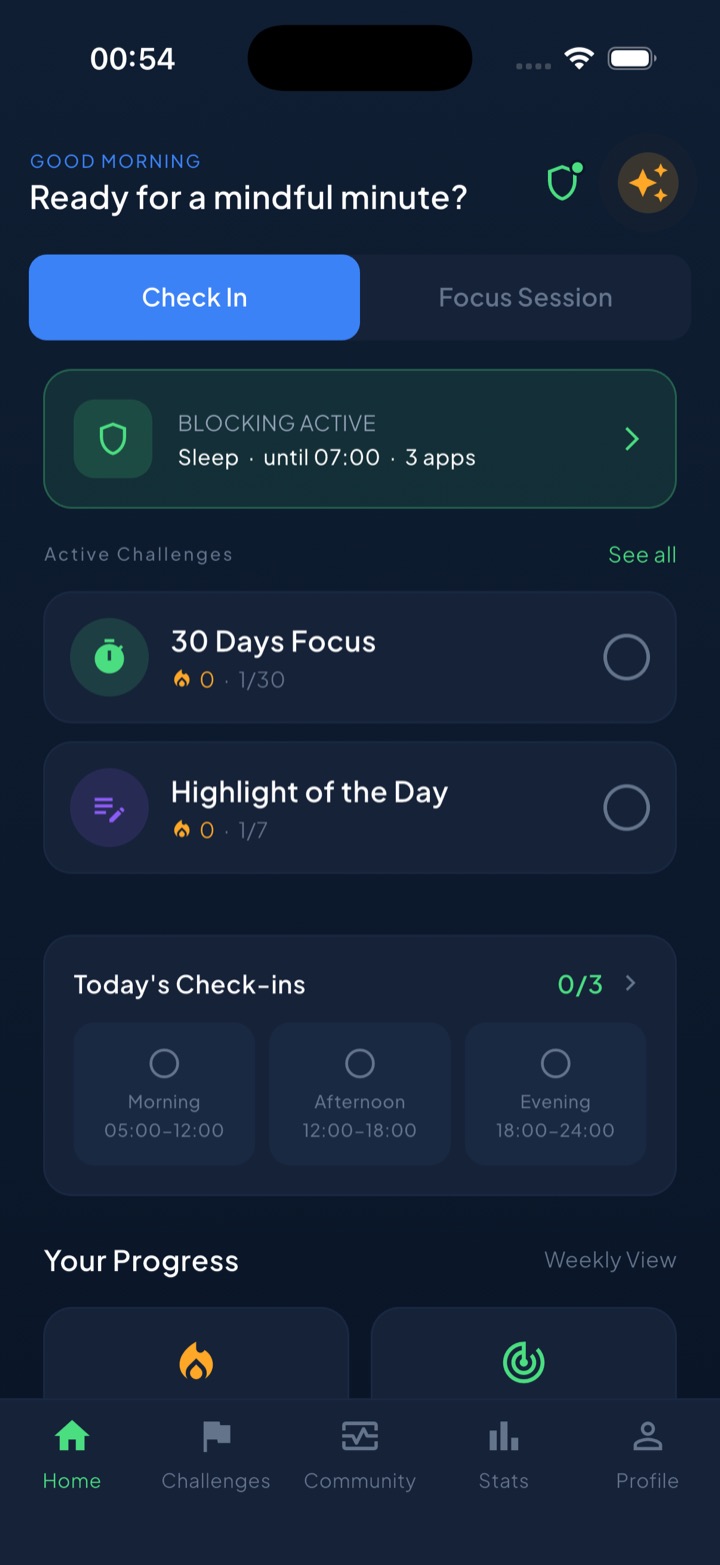
- Scheduled block routines turn your play windows into system-enforced reality: a Sleep routine that shields games and Discord from 23:00, a Study routine for exam weeks — real Screen Time shields, not a notification you can swipe away.
- A short “take a break” bypass exists for the genuine exception, so the system is a speed bump with a purpose, not a wall you’ll rage-delete.
- Focus sessions with a Live Activity give your no-game hours something to be for, and 45+ challenges plus a daily streak make the cut-down visible — day 12 of keeping your schedule is progress you can see, which is exactly the loop games use, pointed at your own life.
- Privacy: your block lists and usage are processed on-device; they never touch our servers.
The honest version: paper schedule, Screen Time, and a logout habit can absolutely do this. Unscrol is for the night the queue whispers “one more” — and the shield, the streak, and the schedule all answer for you.
Frequently asked questions
How do I stop playing video games so much without quitting completely?
Treat gaming like a scheduled hobby instead of a default. Pick fixed play windows for the week, decide each session's end time before you press start, and stop at a natural stopping point — end of the match, a save point, dailies done — never mid-activity. Then add friction for the overtime hours: log out of accounts, disable auto-login, put the controller in a drawer, and block the mobile games and Discord pings that pull you back in. You keep the hobby; you drop the autopilot.
How many hours of gaming a day is too much?
There's no magic number that applies to everyone. A more useful test than hours is displacement: gaming is too much when it regularly eats sleep, meals, deadlines, exercise, or in-person relationships — or when the fun stopped but the hours didn't. Try this: in a calm moment, decide how many hours you actually want to give gaming this week. If you consistently can't stay near that number, the amount isn't the real problem — the loss of control is.
Why can't I stop after 'one more game'?
Because modern games are built without natural endings. Matchmaking restarts in one click, loot and ranked results are unpredictable rewards that keep your brain seeking, and quitting after a loss collides with the urge to 'end on a win.' Psychologists have long observed that unfinished tasks stick in the mind, so stopping mid-loop feels genuinely uncomfortable. The fix is to pre-commit to a stopping point that closes a loop — this match, this quest, this daily — and physically log out when you reach it.
Is gaming addiction real, or is gaming just a hobby?
Both statements can be true. The WHO added gaming disorder to the ICD-11, but it describes a small minority whose gaming causes significant, sustained impairment — most people who play a lot don't meet that bar. For most heavy players the honest label is an unbounded habit: a legitimate hobby that expanded into every free hour. That still deserves fixing, with schedules and friction rather than panic. If gaming feels genuinely out of control or is wrecking your life, talk to a professional.