Exam toppers rarely win on raw intelligence; they win on a small set of ordinary habits run with unusual consistency. Across the students who reach the top, the same pattern repeats: a clear goal set early, a gradual ramp of daily effort rather than last-minute cramming, active recall and mock exams instead of passive rereading, ruthless removal of phone distractions during study, and protected sleep. None of that requires genius. What it requires is doing the boring version of the right things, most days, for months. The good news is that every one of these habits is copyable, which is the whole point of studying what toppers do.
What do exam toppers actually have in common?
Take a concrete example. In interviews after the 2026 LGS, Turkey’s national high-school entrance exam, one 14-year-old reported to be among the country’s top scorers described his method plainly, and none of it was mysterious. He set a goal first. He started preparing in 7th grade and ramped the pace gradually through 8th, pushing hardest in the last three months. He solved reading-comprehension questions every single day and read widely. He did Sudoku to sharpen his attention. He rated mock exams highly. And, crucially, he removed his biggest distraction: he switched to a button phone for a year.
Notice what is absent from that list: no claim of effortless brilliance, no secret technique, no eighteen-hour days. His own summary of motivation was almost aggressively ordinary: “First the goal matters. After the goal, regular and determined work brings success.” That is the entire model. The habits are the story.
Does topping an exam require genius?
Much less than the “genius” narrative suggests, and believing that narrative actively hurts you. If you decide top scores come from a gift you lack, you will not build the habits that actually produce them, because you have pre-explained your way out of trying.
Research on expert performance, associated with Anders Ericsson and the idea of deliberate practice, points the other way: high achievement tracks accumulated, focused, feedback-driven practice far more than raw talent. Deliberate practice is not just repetition; it is working at the edge of what you can do, checking your errors, and adjusting, which is exactly what a topper does when they solve fresh problems daily and review every mistake. Grit, in the popular Angela Duckworth sense, points in a similar direction, though it is worth being honest that its research is contested and probably overstated. The reliable finding is simpler: consistency compounds, and cramming does not.
Which of these habits actually transfer?
You cannot copy someone’s IQ, but you can copy their routine. Here is what transfers, decomposed:
- Goal first. A specific, vivid target (“this school, this program”) gives daily effort a reason to exist. Vague goals produce vague effort. If you need help turning a wish into a pulling force, start with goal setting for students.
- A gradual ramp. Toppers do not go from zero to ten hours overnight; they build the load slowly so it becomes sustainable, which is also how study discipline is actually formed rather than forced.
- Daily active recall. Solving problems and self-testing every day, not rereading notes. Retrieving an answer from memory strengthens it far more than reviewing it does, the core of active recall.
- Distraction removal. The phone is the single biggest threat to focused reps. Toppers remove the option, not just the intention.
- Mock exams, reviewed. Full timed practice tests that reveal weak spots and careless errors, then targeted review of those gaps.
- Protected sleep. Memory consolidates during sleep; trading it for one more review session is usually a net loss.
How much of it is intensity vs. consistency?
Here the toppers’ pattern flatly contradicts the popular image of the marathon crammer. The advantage is built from steady, moderate days, not heroic ones. A quick comparison of the two mindsets:
| Cramming mindset | Topper mindset | |
|---|---|---|
| Effort shape | Rare huge bursts | Moderate, most days |
| Main method | Rereading, highlighting | Active recall, problem-solving |
| Feedback | None until the real exam | Mock exams, error logs |
| Phone during study | On the desk, resisted | Removed or blocked |
| Sleep | Sacrificed near deadlines | Protected throughout |
| Result | Peaks and crashes | A rising, durable baseline |
The right column is not harder on any given day, it is easier. That is precisely why it survives months of preparation while cramming burns out in a week. Steady beats spectacular because steady is repeatable.
What can you copy starting this week?
You do not need to become a different person; you need to install the pattern:
- Write your goal where you’ll see it. One specific target, visible daily.
- Set a fixed daily minimum. Even 45 focused minutes counts, done most days, ramped up over weeks.
- Make every session active. Close the book and retrieve; do not just reread.
- Remove the phone before you start. Another room, or a hard block during the window.
- Run one weekly mock, and review it. The review is where the points hide, more on that in mock exam strategy.
- Guard your sleep like part of the plan, because it is.
“I always thought the top kids were just smarter than me. Then I copied the boring parts: same 90 minutes every evening, phone locked out, self-testing instead of rereading, one mock every Sunday. My scores climbed for the first time in two years. It wasn’t a talent I was missing. It was a routine.” — Sophie, high-school senior, 17
How Unscrol helps you run a topper’s routine
The hardest part of copying a topper is not knowing the habits; it is running them reliably when the phone is one tap away. Unscrol is built to protect exactly that reliability. A focus session starts a distraction-blocking countdown, using Apple’s official Screen Time frameworks to shield your feeds and games while you do your daily reps, with a Live Activity timer on the Lock Screen so the session stays visible.
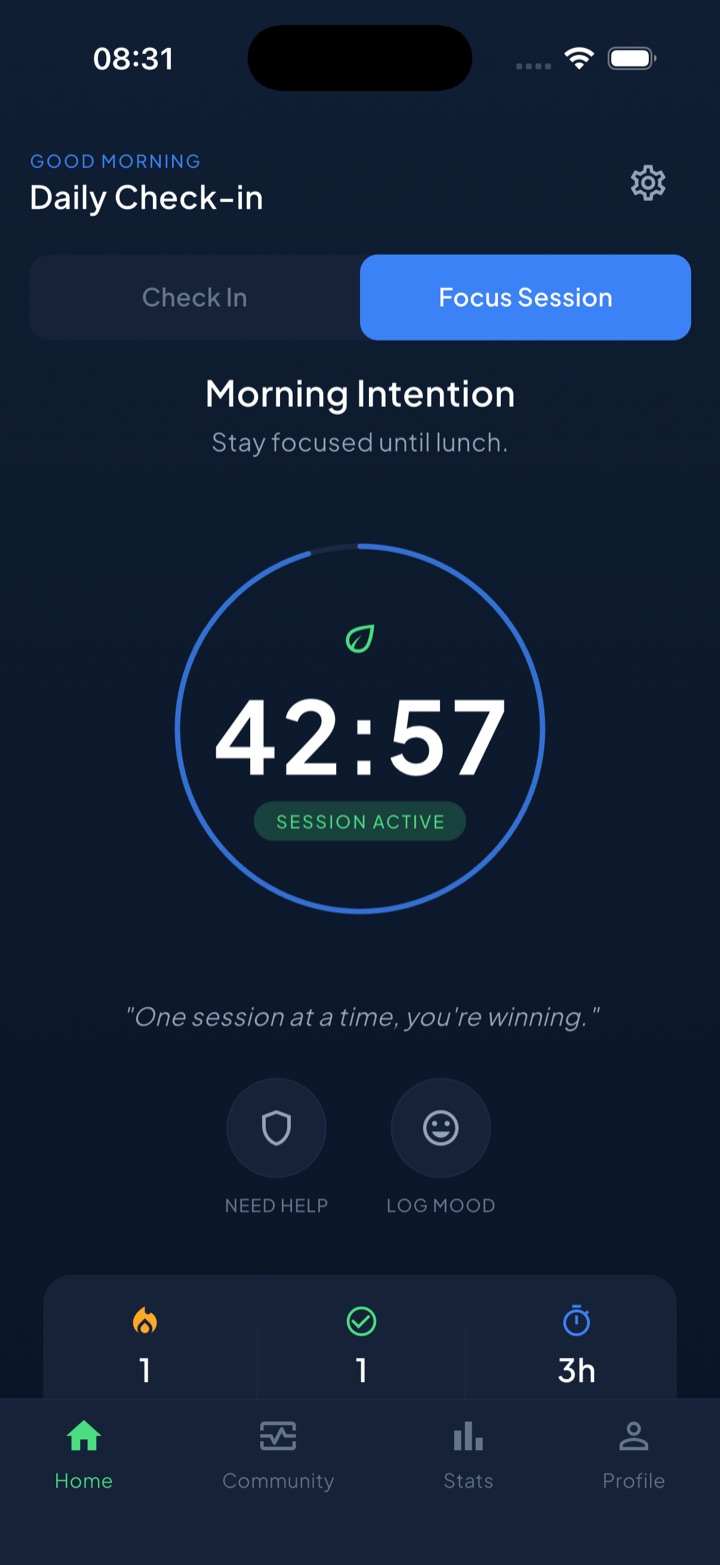
The unified daily streak turns “study most days” into something you can see and protect, so the gradual ramp becomes a chain you don’t want to break, and the Streak Saver keeps one off day from ending it. You can absolutely build this with free tools, a wall calendar, a locked drawer, and a kitchen timer reproduce the core of it. The app just makes the consistency harder to skip and easier to see. Either way, the lesson from the toppers holds: the habits are ordinary; running them without fail is the edge.
Frequently asked questions
What do exam toppers do differently from average students?
Mostly it is consistency, not intensity. Top scorers tend to start earlier, study a little most days rather than cramming in bursts, and use active recall and mock exams instead of passive rereading. They also protect two things average students sacrifice: sleep and an environment free of phone distractions. The habits are ordinary. The reliability with which they run them is what is unusual.
Do you have to be naturally gifted to top an exam?
Far less than people assume. Research on expert performance points to accumulated, focused practice rather than raw talent as the main driver of high achievement. Toppers usually describe a slow ramp of daily effort, not a gift that made study unnecessary. Talent may set an early pace, but for the vast majority of students the deciding factor is how consistently and deliberately they practise over months.
How many hours a day do top students actually study?
Fewer than the myth suggests, but more consistently. Many high scorers ramp gradually, doing moderate focused blocks most days and intensifying only in the final months. Quality matters more than raw hours: two fully focused, phone-free hours of active recall beat six distracted hours of rereading. The pattern is steady daily practice that compounds, not heroic marathon days.