Scrolling while breastfeeding — especially during night feeds — is extremely common, completely understandable, and not a sign that you’re a bad parent. Research on “brexting” (texting or browsing while feeding) is early and limited: a few small studies suggest that being deeply absorbed in a screen may reduce eye contact and responsiveness to a baby’s cues, but nothing shows that a tired mother checking her phone at 3 a.m. is harming her child. The best-documented cost is actually to you — a bright screen and a stimulating feed make it much harder to fall back asleep. So the goal isn’t zero phone. It’s a gentler night-feed setup: protect your sleep, stay present for some feeds, and drop the guilt about the rest.

Why does every new parent scroll during night feeds?
Because a 3 a.m. feed is one of the loneliest, most boring, most sleep-deprived situations a human being can be in — and you’re in it with one hand free and a hard requirement to stay awake.
- Boredom. A feed can take 20–40 minutes, several times a night, for weeks or months. That is hours of sitting still in the dark. Of course your hand finds the phone.
- Loneliness. The house is asleep, the street is asleep, and the phone is the only other adult in the room. For many mothers, a group chat with other feeding parents in other time zones is the difference between “hard night” and “unbearable night.”
- Staying awake. Falling asleep in a chair or on a sofa while holding a baby is genuinely risky, which is why many mothers deliberately use the phone as stimulation. That’s not a vice; it’s a safety strategy.
- It’s the only “you” time. For some parents the night feed is the first uninterrupted fifteen minutes of the entire day. Wanting something of your own in that window is normal.
None of this is weakness. The useful question was never “why can’t you just sit quietly in the dark?” It’s “which parts of the phone are helping you — and which are quietly costing you?”
What is “brexting,” and what does research actually say?
Brexting is a media-coined blend of breastfeeding and texting: using your phone while nursing. Researchers study it under the broader umbrella of “technoference” — technology interrupting parent–child interactions.
Here’s an honest summary of where the science stands:
- The evidence is early and thin. Studies so far tend to be small and observational. Some suggest that when a caregiver is deeply absorbed in a screen, they may make less eye contact, talk to the baby less, and respond a beat slower to feeding cues (slowing down, unlatching, fussing). Researchers themselves are careful to call this preliminary.
- No study shows that normal phone use harms babies. There is a real difference between glancing at your phone during a feed and being so absorbed that you routinely miss cues. The research concern is about the far end of that spectrum, not about you reading the news at 3 a.m.
- Babies don’t need unbroken gaze. Connection is built across the whole day — talking, cuddling, responding, playing. Feeds are long and frequent; no single one carries the relationship. And during many night feeds your baby’s eyes are closed anyway.
A reasonable middle path many pediatric professionals suggest: pick some alert, daytime feeds to be screen-free and social — chat, sing, hold eye contact — and give yourself full permission for the phone during sleepy night feeds. And if you have any actual feeding worry — latching, supply, weight gain — ask your pediatrician or a lactation consultant. Instagram at 3 a.m. is the worst medical adviser you can hire.
What does 3 a.m. scrolling cost your sleep?
This is the part with the strongest evidence, and the cost lands on you, not the baby.
New-parent sleep is already broken into fragments, which makes every “fall back asleep quickly” window precious. Scrolling works against that window in three ways:
- Light. Studies consistently link bright, blue-heavy screen light in the night hours with suppressed melatonin and delayed sleep. At 3 a.m., a full-brightness screen a foot from your face is about the strongest “wake up!” signal you can send yourself. (More on the mechanics in screen time and sleep.)
- Arousal. Even dim content can be mentally activating. News, arguments, other people’s highlight reels — your body settles the baby while your mind spins up. If your night reading skews toward alarming content, the doomscrolling spiral is especially cruel at 3 a.m., when everything feels heavier anyway.
- The “one more” design. The feed ends, the baby is down… and you’re still scrolling 25 minutes later, because infinite feeds are engineered to not give you an exit. That’s stolen re-sleep time — the same trap as scrolling in bed, with higher stakes.
One gentle, important note: if your night scrolling is mostly anxious checking — symptoms, dangers, “is this normal” searches on repeat — that’s worth mentioning to your doctor or midwife. Postpartum worry is extremely common and very treatable, and you deserve support, not a stricter screen rule.
Do you have to give up the phone at night feeds?
No. All-or-nothing rules collapse fast under sleep deprivation, and the guilt that follows makes everything worse. The smarter move is to keep what the phone gives you and change the format:
| What the phone gives you at 3 a.m. | A gentler version that keeps the benefit |
|---|---|
| Staying awake | A podcast or audiobook — ears busy, eyes and room dark |
| Company | Voice-note a friend; a night-feed group chat you reply to in the morning |
| Entertainment | E-reader on dark mode; a pre-saved calm playlist |
| Reassurance (symptom googling) | One note where questions wait for the pediatrician |
| Tracking the feed | Log it in 10 seconds, then phone face-down |
What gentle changes actually work?
- Move the stimulation to your ears. Audio is the single best swap: it keeps you awake without light, and you can keep your eyes on the baby — or closed.
- Dim everything. Night Shift, lowest brightness, dark mode, a warm-toned night light. If you scroll, scroll dim.
- Choose your content before the night. A saved queue of calm videos, articles, or episodes beats whatever the algorithm decides a tired brain should see.
- Keep one daytime feed phone-free. Not as a rule — as a small experiment in eye contact while your baby is actually alert. Most mothers find it’s the feed they end up liking most.
- Adopt a morning-reply rule. Read the message, draft the reply, send it after sunrise. The chat survives; your melatonin doesn’t have to.
- Build a 3 a.m. kit. Water, a snack, a burp cloth, one earbud, e-reader — all within arm’s reach so the phone isn’t the only convenient object in the room. (For daytime ideas, raid our list of things to do instead of scrolling.)
“The 3 a.m. feeds were when the walls closed in — I scrolled to survive them, then lay awake wired and hated myself for it. I didn’t quit the phone. I switched to audiobooks with the screen face-down and left one daytime feed just for us. My daughter got fed either way; I fell back asleep faster; and the guilt quietly left the room.” — Hannah, pediatric nurse and new mom, 31
How does Unscrol help with night-feed scrolling?
Start with the free, built-in route: on iPhone, Apple Screen Time can schedule Downtime across your usual night window (say 23:00–06:00) so only the apps you choose — podcasts, audiobooks, your baby tracker, the phone itself — stay easy to reach, and App Limits can cap the one or two feeds that eat your nights. Add Night Shift and low brightness, and you’ve already changed the math.
Unscrol is the iPhone app that makes that setup stick, using Apple’s own Screen Time frameworks for real, system-enforced blocking — with your block lists and usage processed entirely on-device, never sent to our servers.
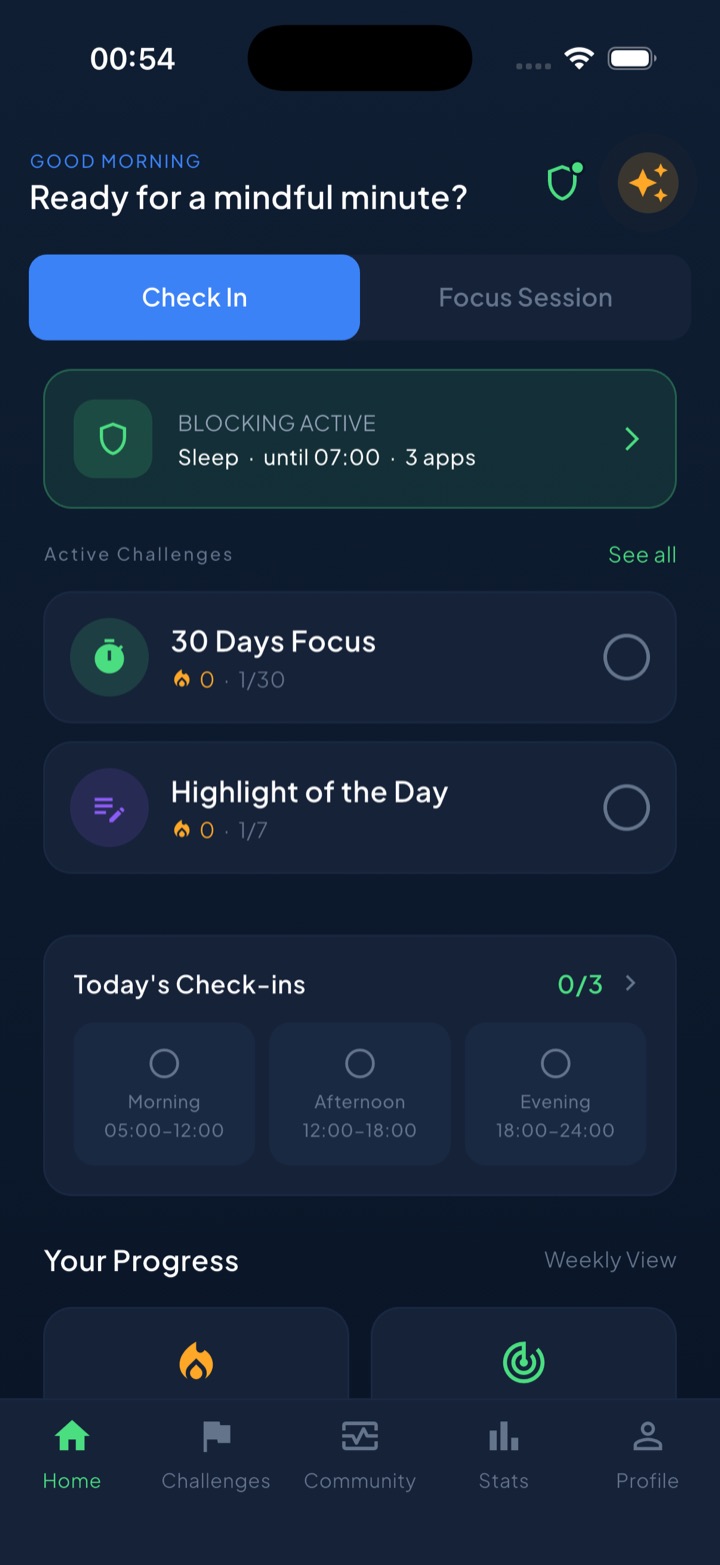
For night feeds specifically, it’s a good fit because it’s built around flexibility rather than punishment:
- A scheduled Sleep routine shields just your chosen doomscroll apps overnight, while everything you actually need at 3 a.m. — audio apps, notes, the camera for that one milestone — stays open.
- The “take a break” bypass matters here more than anywhere: sometimes you genuinely need the blocked app (ordering diapers at 4 a.m. is real life). A short, deliberate bypass beats deleting the whole system in frustration.
- Focus sessions and gentle streaks give you something kinder to build than willpower: a run of nights where the feed stayed calm and you got back to sleep.
The honest version: a paper book, a podcast queue, and Apple’s free tools can do this. Unscrol is the layer that keeps the plan running on night forty, when you’re too tired to re-decide anything — which is exactly the point.
Frequently asked questions
Is it bad to scroll on your phone while breastfeeding?
For most families, no — and it is certainly not a sign of bad parenting. Research on distracted feeding is still small and early, and nothing shows that a tired parent checking a phone during a 3 a.m. feed harms a baby. Feeds are long and frequent; you do not owe your baby unbroken eye contact through every single one. The clearest documented cost is to your own sleep, so dimming the screen and choosing calmer content matters more than quitting.
What is brexting?
Brexting is an informal term for texting or browsing on your phone while breastfeeding. Researchers study it under the broader idea of 'technoference' — technology interrupting parent-child moments. A few small studies suggest that being deeply absorbed in a screen may reduce eye contact and slow responses to feeding cues, but the evidence is early, limited, and far from a verdict. Most experts frame it as something to be mindful of during alert daytime feeds, not something to feel guilty about at night.
Does using my phone while feeding affect my baby's development?
There is no solid evidence that ordinary phone use during feeds harms a baby's development. Babies benefit from eye contact, talking, and responsive care across the whole day — no single feed carries that weight, and many night feeds happen with a sleepy baby whose eyes are closed anyway. If you have concerns about feeding, latching, weight gain, or bonding, talk to your pediatrician or a lactation consultant rather than relying on social media.
How can I stay awake during night feeds without scrolling?
Audio is the kindest swap: podcasts or audiobooks keep your brain engaged while the room and your eyes stay dark. It also helps to sit slightly upright in a chair rather than lying in bed, keep water and a snack within reach, and use a dim, warm-toned night light. If you do use the phone, lowest brightness plus Night Shift protects your ability to fall back asleep — which is the thing 3 a.m. scrolling costs most.