The reason you can’t stop scrolling isn’t weak willpower — it’s that you never decided what to do instead. Every scroll is a habit quietly filling an empty moment, so the fix isn’t just putting the phone down; it’s having a ready-made menu of replacement activities you can reach for on autopilot. Below are 50 things to do instead of scrolling, grouped by how much time you have — from 2-minute fillers for the exact second your thumb twitches, to evening wind-downs, ways to connect, and small creative projects. Screenshot it or stick it on your fridge. The goal is simple: make the good option the easy option.
Why does replacing scrolling beat just restricting it?
Scrolling is a habit loop: a cue (boredom, a pause in a conversation, a flicker of anxiety) triggers a routine (grab the phone) that pays out a small, unpredictable reward. Willpower attacks the routine but leaves the cue and the reward untouched — so the second you set the phone down, the same cue fires and your hand drifts back. That’s why pure restriction feels like holding your breath. Replacement swaps a new routine onto the same cue, so the loop still closes and the urge has somewhere to go.

The mental model that makes this stick is a dopamine menu — a pre-written list of small, genuinely rewarding actions you keep somewhere visible. When the urge hits, you don’t have to think or negotiate; you just glance at the menu and do the next thing on it. Deciding once, in advance, beats deciding fifty times a day in the heat of the moment. If you want the deeper reset behind all of this, pair these ideas with a proper digital detox.
“I didn’t need another app screaming ‘stop.’ I needed a list on my fridge. Now when I’m bored I make tea and read four pages — the phone doesn’t even come up.” — Daniel, product designer, 34
What can I do in 2 minutes instead of grabbing my phone?
These are for the exact moment your hand reaches for your pocket — the kettle boiling, the lift arriving, the ad break. Small, physical, instant.
- Drink a full glass of water. Most idle reaches are mild thirst in disguise.
- Take ten slow breaths. Box-breathe: in for four, hold four, out four.
- Stand and stretch. Roll your neck and shoulders, reach for the ceiling.
- Look out the window. Focus on something far away to rest your eyes.
- Write one line. Keep a pocket notebook for a thought or a to-do.
- Tidy one surface. Clear the desk, nightstand, or the edge of the sink.
- Send a real hello. Message someone you miss — not a scroll, a person.
- Do 15 squats or a wall-sit. A tiny hit of movement resets your state.
- Step outside. Feel the temperature and the light for thirty seconds.
- Do nothing on purpose. Let your mind wander — boredom is where ideas start.
What fills a real 15-30 minute gap?
When you’ve got an actual pocket of time, these give you something to finish, which is exactly what an endless feed never does.
- Read a chapter of a paper book. Analog reading holds attention that screens fragment.
- Walk without headphones. Let the outside be the entertainment for once.
- Cook something simple from scratch. Hands busy, phone down, dinner sorted.
- Journal three lines. What happened, how you felt, one thing for tomorrow.
- Play or learn an instrument. Three chords is enough to start.
- Sketch what’s in front of you. No talent required — just look closely.
- Do a paper crossword or Sudoku. Puzzles scratch the same itch, better.
- Stretch or do light mobility. Ten minutes undoes hours of hunching.
- Water and prune your plants. A calm, finite, quietly satisfying loop.
- Do one household reset. Dishes, laundry, a five-minute tidy sprint.
- Write a postcard or real letter. Nobody deletes those.
- Sit with a coffee and people-watch. Presence, not a screen, on purpose.
Here’s the difference the swap actually makes:
| Restriction only | Replacement-first | |
|---|---|---|
| The empty moment | Left blank, so the urge returns | Filled with a chosen action |
| Willpower needed | High — you fight the cue | Low — you follow a new default |
| How it feels | Deprivation | Substitution |
| Over weeks | Fades in a few days | Compounds into a habit |
Evenings, connecting, and getting outside
Wind down without a screen. Take a warm shower before bed. Read fiction under a dim, warm lamp. Do a 10-minute living-room tidy. Plan tomorrow on paper. Listen to a full album with the lights low and nothing else open. Make herbal tea. Write down three good things from the day. Moving your phone charger out of the bedroom is the single highest-leverage swap here — it’s also the backbone of a solid phone-free morning routine.
Connect with actual people. Call a friend or parent instead of texting. Invite someone for a walk. Host a no-phones dinner. Play cards or a board game. Join a local club or class. Volunteer for a couple of hours. Send a genuine thank-you to someone who helped you.
Get outside. Go for a run or bike ride. Sit in a park with no agenda. Learn the names of five local trees or birds. Take a photo walk — camera or just your eyes. Grow herbs on a windowsill or start a small garden. Fresh air is the oldest antidote to the itch, and it’s a natural exit ramp when you want to stop doomscrolling for good.
Creative projects and “productive procrastination”
The best replacements aren’t just time-fillers — they’re things you’ll be glad you started. Keep two or three of these going so there’s always an open project competing with the feed.
- Start a jigsaw or model kit. A slow build you return to, not finish in one sitting.
- Batch-cook for the week. Future-you thanks present-you.
- Learn a skill from a book. One source beats a 40-tab video spiral.
- Declutter one drawer. Small, visible, weirdly energising.
- Write morning pages. One page, longhand, no editing — just clear the head.
Not every replacement has to be “productive.” Rest counts too — a nap, a bath, or staring at the ceiling all beat a scroll that leaves you more tired than when you started.
How Unscrol helps you reach for the replacement
Let’s be honest: you don’t strictly need an app for any of this. Apple’s built-in Screen Time can set app limits for free, and a list on your fridge is a real strategy. The hard part isn’t knowing the alternatives — it’s remembering them in the half-second before the thumb moves. That’s the gap Unscrol is built to close: consistency, not another lecture.
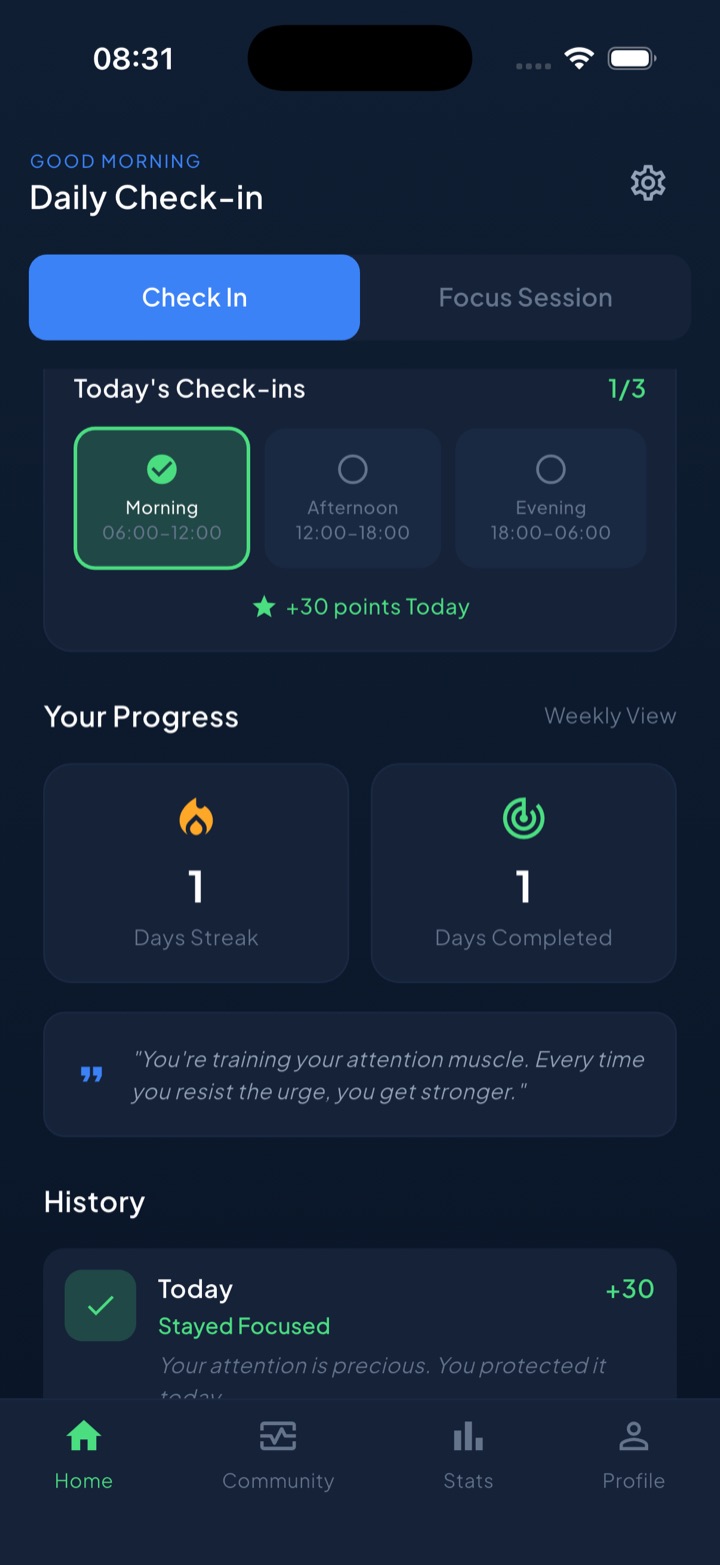
Unscrol uses Apple’s official Screen Time frameworks to put a real, system-enforced shield on the apps you name — so when boredom sends you to the feed, you hit a pause instead of a rabbit hole (with a short “take a break” bypass for the times you genuinely need in). You can schedule that block around your life — a Sleep routine from 22:00, a Work block from 09:00 — so the feed isn’t there in the moments you’d default to it. And a daily streak with quick mood check-ins turns “do something else” from a one-off into a habit you can watch building, which is the whole point of tracking the habit. Which apps you block and your usage stay on your device — iOS handles that, and it never reaches our servers. Unscrol is free to download; Pro adds Streak Saver if you want a safety net for your streak.
Frequently asked questions
What can I do instead of scrolling on my phone?
Pick a replacement that matches the time you have. For the 2-minute urge, drink a glass of water, do ten slow breaths, stretch, or text a real hello. For 15-30 minutes, read a chapter of a physical book, take a walk without headphones, cook something simple, or journal three lines. In the evening, read fiction under a warm lamp, tidy one surface, or plan tomorrow on paper. The trick isn't picking the perfect activity — it's deciding in advance so the good option is the easy one when boredom hits.
Why do I keep scrolling even when I'm bored and don't enjoy it?
Scrolling is a habit loop, not a choice. A cue (boredom, a pause, a flicker of anxiety) triggers a routine (grab the phone) that delivers a small, unpredictable reward. Because the loop is automatic, willpower barely touches it — the moment you put the phone down, the same cue fires again and your hand drifts back. That's why simply restricting yourself rarely sticks. The reliable fix is replacement: keep a short menu of alternative actions ready so the same cue triggers a new routine instead. You're not fighting the urge, you're redirecting it.
What should I do instead of scrolling in bed at night?
Move the trigger out of the room. Charge your phone in another room and keep a paper book, a notebook, and a glass of water on the nightstand so the default action becomes reading or writing, not reaching for a screen. Good swaps include reading fiction under a warm, dim lamp, writing down three good things from the day, planning tomorrow on paper, a slow stretch sequence, or a cup of herbal tea. Screen light and doomscrolling both delay sleep, so the earlier you break the in-bed scroll, the faster you'll fall asleep.