If you can’t focus anymore, it is almost never a broken brain and almost always a set of fixable conditions stacking on top of each other. The seven most common are a fragmented attention diet, sleep debt, chronic stress, notification conditioning, a hardened multitasking habit, an elevated stimulation baseline from cheap dopamine, and never being bored. Each has a specific fix. Most people feel a real difference within a week or two of changing just two or three of them. If your focus problems are severe, sudden, or paired with other symptoms like low mood or memory loss, that is the point to talk to a clinician rather than diagnose yourself.
Is something actually wrong with my brain?
Almost certainly not. It is worth hearing that plainly, because the fear that “my attention is permanently broken” is itself a stressor that makes focusing harder. Attention is not a fixed trait you either have or have lost. It is a skill that responds to conditions — and modern life has quietly worsened most of those conditions at once. That is bad news for your last few years of concentration and very good news for the next few weeks, because conditions can be changed.
The rest of this article is the seven usual suspects. Read them as a checklist, not a diagnosis.
The 7 real causes (and the fix for each)
1. A fragmented attention diet. If most of what you consume is short — reels, posts, quick videos — you are training your attention to expect a new hit every few seconds. Researcher Gloria Mark, who has tracked people’s screens for two decades, found the average attention span on a screen has fallen to roughly 47 seconds. Your brain adapts to whatever you feed it. Fix: deliberately consume long things again — a full article, a chapter, a two-hour film without your phone. You are re-lengthening the muscle.
2. Sleep debt. Nothing wrecks concentration faster than being under-slept, and most people carry more debt than they think. Sleep researcher Matthew Walker’s work links short sleep to impaired attention, working memory, and emotional regulation — the exact toolkit focus depends on. Fix: protect a consistent sleep window before you touch anything else; it multiplies every other fix. See screen time and sleep for the phone’s specific role here.
3. Chronic stress. Sustained stress keeps cortisol elevated, which biases the brain toward threat-scanning and away from sustained, calm attention. When you feel scattered and can’t settle, stress is often the driver. Fix: a genuine daily downshift — a walk, slow breathing, exercise — not more caffeine, which impersonates focus while raising the baseline stress.
4. Notification conditioning. Every ping trains a reflex: interruption, then reward. Over months this rewires you to seek interruption. Even unanswered, each notification is an attention tax. Fix: turn off nearly all notifications and batch the rest into scheduled summaries. This is the single highest-return change most people can make in an afternoon.
5. A hardened multitasking habit. Constant task-switching feels productive and is corrosive. Every switch leaves what psychologist Sophie Leroy calls attention residue — part of your mind stays stuck on the last thing. Do it all day and you are never fully present on anything. Fix: single-task in blocks. One tab, one task, phone out of the room.
6. An elevated stimulation baseline. You cannot “deplete” dopamine, despite the internet’s claims — but a steady diet of intense, effortless stimulation does make ordinary tasks feel flat by comparison. Reading a report after an hour of TikTok is like tasting water after soda. Fix: reduce the cheap, high-intensity inputs so slower rewards register again. More on the science in dopamine and social media.
7. You never let yourself be bored. The instant a gap opens — a queue, an elevator, a lull — you fill it with the phone. But tolerating boredom is the same skill as tolerating the discomfort of a hard task. Kill all boredom and you untrain the ability to sit with anything unstimulating. Fix: leave the phone in your pocket during small dull moments on purpose. These are reps.
Which cause is yours?
You do not have all seven equally. Match the symptom to the likely culprit:
| What you notice | Most likely cause |
|---|---|
| Foggy, heavy, can’t wake up mentally | Sleep debt |
| Restless, reaching for the phone every few minutes | Fragmented attention diet, notification conditioning |
| Wired but scattered, mind racing | Chronic stress |
| Everything slow feels unbearably dull | Elevated stimulation baseline |
| Always busy, never finish anything deeply | Multitasking habit |
| Can’t tolerate any quiet or waiting | No boredom tolerance |
Start with your top two rows. You do not need to fix everything.
The two-week reset (free, no app required)
You can do all of this with tools you already own:
- Week 1 — remove inputs. Turn off notifications. Move social and video apps off the home screen. Protect a fixed sleep window. Leave the phone in another room during work and meals.
- Week 2 — rebuild capacity. Do one 25-minute single-task block a day and slowly extend it. Read one long thing daily. Take three phone-free boredom breaks. If you want a structured progression, how to increase your attention span lays out a four-week version.
That is a complete program with nothing but Apple’s built-in Screen Time and a decision to be a little bored.
When should you see a doctor?
This article describes research; it is not medical advice, and lost focus is a symptom shared by many treatable conditions. Talk to a clinician if your concentration problems are severe or came on suddenly, if they are paired with persistent low mood, anxiety, or memory loss, if they have been lifelong and significantly disrupt work and relationships (which can point to conditions like ADHD, best assessed by a professional rather than a quiz), or if lifestyle changes bring no improvement at all. Getting focus back should not require a diagnosis for most people, but ruling things out is wise when the pattern is extreme.
How Unscrol tackles the fixable causes
“I assumed my focus was just gone for good at 31. Turns out it was three of the seven — bad sleep, notifications, and never being bored. Blocking apps during work with Unscrol and actually sitting through the dull moments brought most of it back in a couple of weeks.” — Marcus, project manager, 31
Four of the seven causes above are directly about your phone, which is why a tool that governs the phone moves the needle. Unscrol uses Apple’s official Screen Time frameworks to shut distracting apps during the hours you choose, which cuts notification conditioning and the fragmented attention diet at the source. Its focus sessions give you a clean single-task block with a Lock Screen countdown, and the daily check-ins build the habit of noticing when you are reaching for stimulation out of boredom rather than need.
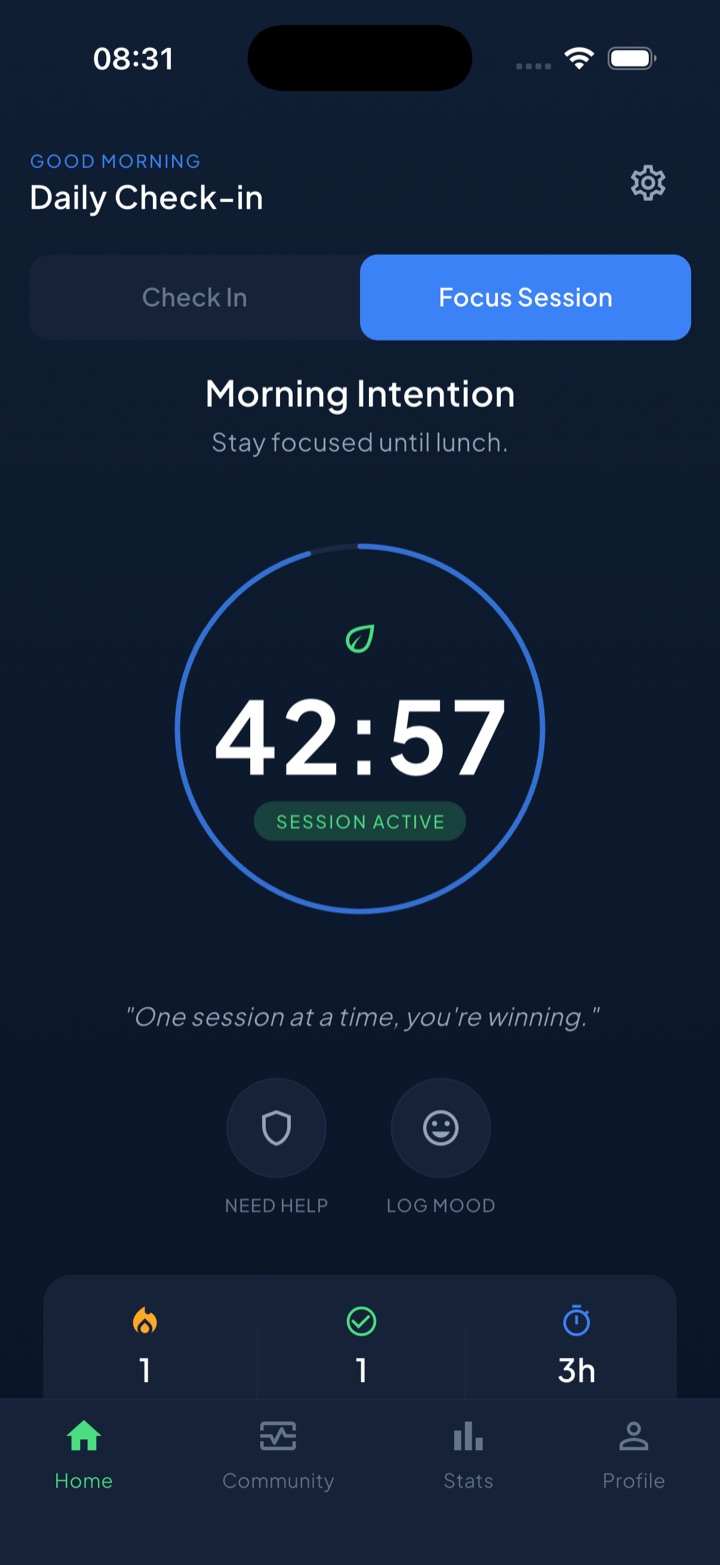
None of it is magic, and none of it replaces sleep or a clinician when one is needed. It just removes the phone-shaped causes so the other fixes have room to work.
Your focus is not gone. It is buried under conditions you can change, mostly starting tonight.
Frequently asked questions
Why can't I focus anymore?
In most cases it is not a broken brain but several fixable conditions stacking up: a fragmented attention diet from constant short-form input, sleep debt, chronic stress, notification conditioning, a hardened multitasking habit, an elevated stimulation baseline, and never being bored. Each has a specific fix, and most people notice a real difference within a week or two of changing just two or three of them.
Is losing my ability to focus a sign of something serious?
Usually not. Modern life fragments attention by design, and the good news is that most focus problems trace to lifestyle and environment, not disease. That said, if your difficulty concentrating is severe, came on suddenly, or comes with low mood, memory loss, or other changes, that is a reason to talk to a clinician rather than self-diagnose from an article. Focus is a symptom of many treatable things.
How long does it take to get my focus back?
Faster than most people expect. Because the main causes are conditions rather than permanent damage, changing two or three of them, like fixing sleep and cutting notifications, often produces a noticeable improvement within one to two weeks. Rebuilding the ability to hold deep concentration for long stretches takes longer, a few weeks of deliberate practice, but the initial lift comes quickly.
Does my phone actually make it harder to focus?
Yes, in several ways at once. Notifications train your brain to expect interruption, short-form video sets a high stimulation baseline that makes slower tasks feel dull, and research by Adrian Ward found that the mere presence of a phone on the desk measurably reduces available working memory even when it is face-down and silent. The phone is often the single biggest lever on your focus.