Social media and anxiety are genuinely linked — but the connection is smaller, and more about how you use it than how long. Decades of survey research find that heavier social media use is consistently associated with more anxiety and lower well-being, especially in teenagers. But those studies measure correlation, not cause, and the effect sizes are modest — one widely-cited 2019 analysis found that digital-technology use explained well under 1% of the variation in adolescent well-being, on par with everyday factors like wearing glasses or eating potatoes. The stronger, more specific culprits are passive scrolling, social comparison, sleep loss, and FOMO — not “screens” in the abstract. Change those, and the anxiety often eases even if your total hours barely move.
Does social media actually cause anxiety, or just correlate with it?
This is the crux, and it’s easy to get wrong. Almost all the alarming headlines come from cross-sectional studies: they photograph a moment in time and notice that heavy users report more anxiety. That’s real, but it can’t tell you which came first. It’s just as plausible that anxious people reach for social media more — to numb, distract, or seek reassurance — as it is that the app made them anxious. The relationship almost certainly runs both ways.
To break the tie, researchers run experiments. The best-known asked people to deactivate Facebook for four weeks; the group that quit reported small but real gains in happiness and life satisfaction, and got several hours a week back. Other randomized trials are more mixed — some show benefits, some show almost nothing. The honest summary: quitting helps a little, on average, for some people. It is not the switch that flips your mental health.

Why do scientists disagree so much?
Because the data genuinely support more than one story. Psychologist Jonathan Haidt, in The Anxious Generation, argues that the arrival of smartphones and image-based social media around 2010–2015 rewired childhood and helped trigger a teen mental-health crisis, hitting girls hardest. On the other side, researchers like Candice Odgers and Andrew Przybylski counter that the evidence is mostly correlational, the average effects are tiny, and that blaming phones risks a moral panic that distracts from bigger drivers of anxiety.
Both camps actually agree on more than the debate suggests: that a subset of vulnerable, heavy users can be genuinely harmed, and that averages hide big individual differences. So the useful question isn’t “is social media bad?” — it’s “is it bad for you?” That’s an answerable, personal question, and it’s where the research advice gets practical.
Which parts of social media drive anxiety?
“Screen time” is too blunt a measure. When you break usage into mechanisms, some have far better evidence than others:
| Mechanism | How it fuels anxiety | Evidence strength |
|---|---|---|
| Social comparison | Measuring your ordinary life against others’ curated highlight reels breeds envy and inadequacy | Moderate–strong |
| Sleep displacement | Late scrolling delays and fragments sleep, and poor sleep raises next-day anxiety | Strong |
| FOMO & notification pressure | The pull to constantly check keeps your nervous system on low alert | Moderate |
| Cyberbullying (teens) | Harassment and exclusion online map clearly onto anxiety and depression | Strong for those affected |
| Dopamine-driven habit loops | Variable rewards keep you scrolling past the point of enjoyment | Mostly mechanistic |
The pattern that emerges: passive consumption and comparison hurt; active connection largely doesn’t. Messaging a friend or posting your own thing is a different activity from silently scrolling a stranger’s vacation photos for an hour. That distinction — passive versus active use — is one of the more reliable findings in the whole field, and it also explains why the reward loops behind these apps are engineered to keep you passive.
Who is most at risk?
Not everyone. Plenty of people use social media daily with no measurable dent in their mood. Risk concentrates in a few groups:
- Heavy passive users — the more your time skews toward silent scrolling versus interacting, the worse the association.
- Teen girls, in several studies — appearance-based comparison on image-heavy platforms shows some of the strongest links.
- People already prone to anxiety — who are more likely to use social media to self-soothe, deepening the loop.
- Late-night users — because screens before bed cost you sleep, and lost sleep is one of the most reliable amplifiers of anxiety there is.
If you recognize yourself here, that’s not a verdict — it’s a signal to watch your own pattern more closely.
How do you use social media without the anxiety?
You don’t need to quit. You need to change the kind of use. Try these in order:
- Shift from passive to active. Before you open an app, decide what you’re there to do — reply to a friend, post something, look one thing up — then leave. Aimless scrolling is the mode that hurts most.
- Clean your feed. Mute or unfollow accounts that reliably leave you feeling worse. Curating who you see is one of the fastest anxiety wins, and it costs nothing.
- Time-box it. Give social apps a daily budget and move them off your home screen so opening them is a choice, not a reflex.
- Protect the first and last hour of your day. No feeds before you’re properly awake or as you’re trying to sleep. If the urge to check feels like dread when your phone is out of reach, that’s worth noticing too.
- Track your mood against your usage. This is the big one. Averages across millions of people can’t tell you what a given app does to you — but a few weeks of your own data can.
“I spent years assuming Instagram was fine because ‘the studies are mixed.’ Then I logged my mood next to my usage for a month. It wasn’t the app — it was Sunday-night comparison scrolling that wrecked my week. I cut that one window and my baseline anxiety genuinely dropped.” — Maya, graduate student, 24
How Unscrol helps you find your own pattern
Before anything else: you can do a lot of this for free. Apple’s built-in Screen Time already shows how long you spend in each app and lets you set app limits — a real, honest starting point that costs nothing. Unscrol exists for the part Screen Time doesn’t do: connecting how you feel to what you use, and helping you stick with the change.
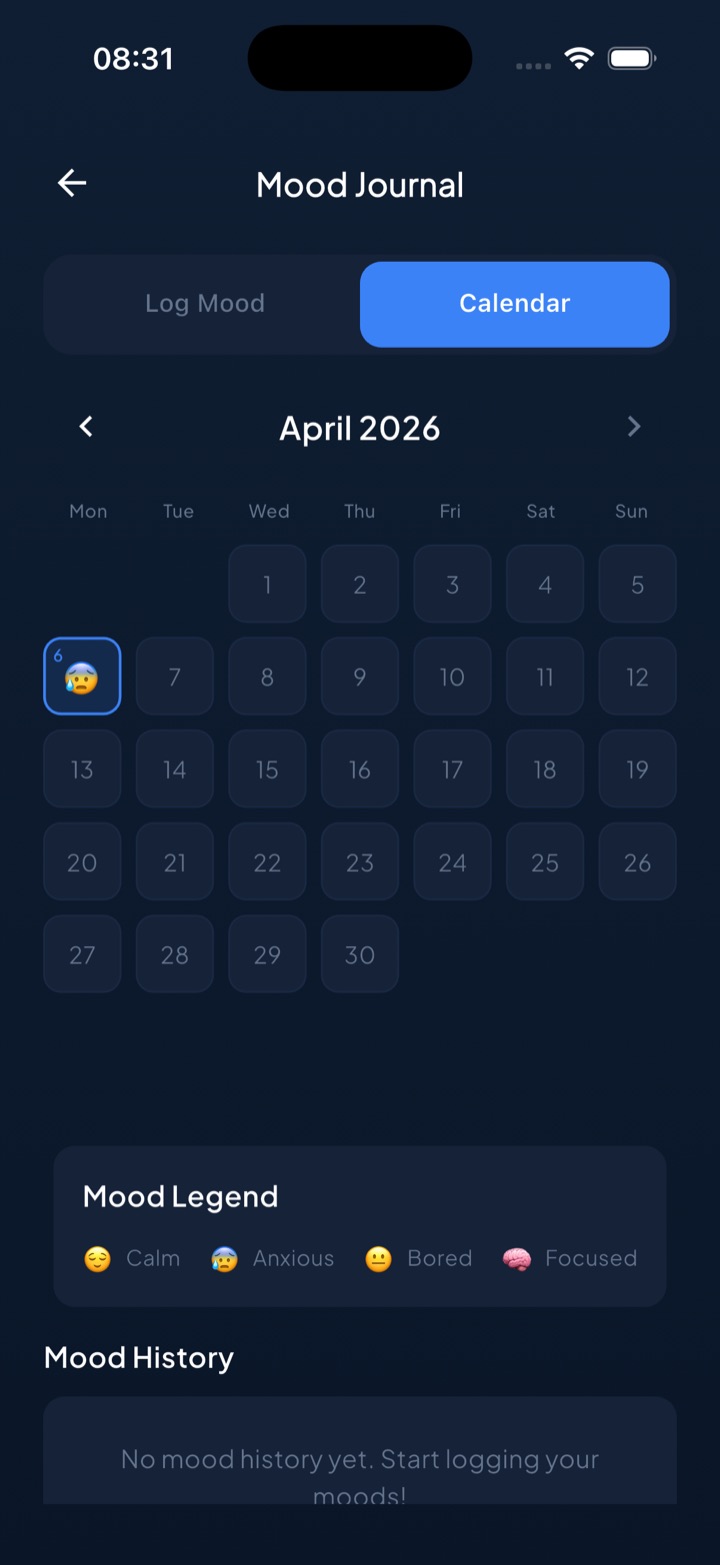
The core idea is n-of-1 evidence. Unscrol’s quick mood and urge check-ins sit right next to your usage, so instead of arguing about population averages you build a personal record of which apps, at which times, actually move your anxiety. When you spot the culprit — the Sunday comparison scroll, the midnight feed — you can set a scheduled block so those apps simply shield themselves during your danger windows, using Apple’s official Screen Time frameworks rather than easy-to-ignore reminders. A short “take a break” bypass keeps it humane, not a prison. And a single daily streak rewards the consistency that actually changes a habit. The goal isn’t to prove social media is evil. It’s to find out what it’s doing to you, and to make the better choice the easy one.
Frequently asked questions
Does social media cause anxiety?
Not in a simple, one-way sense. Large studies consistently link heavier social media use with more anxiety, but the effect is modest and correlational — anxious people also use social media more to cope, so it runs both ways. The strongest experiments, where people quit for a few weeks, find small average improvements in mood, not dramatic ones. What matters most is how you use it: passive scrolling, appearance comparison, late-night use and FOMO drive anxiety far more than raw screen hours do.
Which social media habits are worst for your mental health?
Four patterns have the most research support. Passive scrolling — consuming without interacting — tracks worse than active messaging or posting. Social comparison against curated highlight reels breeds inadequacy and envy. Using social media in the last hour before bed displaces sleep, which worsens next-day anxiety. And constant checking driven by FOMO or notifications keeps your nervous system in low-grade alert. For teens, cyberbullying is a strong, well-documented driver. Changing these specific habits usually helps more than a blanket detox.
Does deleting social media reduce anxiety?
Sometimes, but the effect is usually smaller than people expect. Controlled deactivation experiments — where participants quit a platform for two to four weeks — tend to find modest improvements in well-being and more free time, not a cure. A full delete can also cut you off from real friendships and support, which backfires for some people. For most, a middle path works better: prune your feed, move social apps off the home screen, set time limits, and keep the connection while dropping the doomscrolling.