A dopamine detox does not reset your brain chemistry, and you cannot deplete dopamine by avoiding your phone for a day. Dopamine is a background signaling molecule your brain regulates automatically, not a battery that drains and recharges. What the trend gets right is behavioral: taking a scheduled break from the fastest, most intense rewards makes slower, effortful ones feel worthwhile again. The psychiatrist who coined “dopamine fasting,” Cameron Sepah, meant exactly this — a stimulus-control technique from cognitive behavioral therapy, not a chemical cleanse. So the fix isn’t fasting from pleasure. It’s changing what is easy to reach.
What is a dopamine detox supposed to do?
The popular version goes like this: modern life floods you with dopamine from feeds, games, sugar, and porn, this “overloads” or “spikes” your dopamine until everyday life feels dull, and a period of abstinence lets your dopamine “reset” to a healthy baseline. Some people take it to extremes — a day of no screens, no music, no talking, no food, sometimes no eye contact.
The intuition behind it is real and worth taking seriously. If you spend hours a day on the most engineered rewards ever built, quieter pleasures like reading or a walk really can start to feel flat. Millions of people notice this, and they aren’t imagining it. The problem is only the explanation. The mechanism is not a dopamine tank that fills and empties, and treating it that way leads to dramatic rituals that miss the point.
What does dopamine actually do, and what does it not?
Dopamine is not the “pleasure chemical.” Neuroscientists such as Wolfram Schultz showed that dopamine neurons fire mostly in response to reward prediction error — the gap between what you expected and what you got. A reward you fully predicted barely moves it; a surprise reward spikes it. This is exactly why a feed of unpredictable content is so sticky: the variable payoff keeps the prediction error alive. Slot machines run on the same principle.
Two things follow from this that the detox myth ignores:
- You can’t run out. Your brain synthesizes and clears dopamine continuously and keeps it in a regulated range. There is no meaningful sense in which a person with a normal brain “spends” their supply and needs a day off to refill.
- What changes is sensitivity, not volume. With heavy, repeated stimulation, receptors and reward circuits adapt so the same hit does less. This is why the tenth video feels weaker than the first. Easing off can let that sensitivity partly recover, but over weeks, not hours.
So the honest framing is: you are not detoxing a poison. You are letting an over-adapted reward system re-learn that slower things are worth doing. That reframing changes the whole plan.
Where did “dopamine fasting” really come from?
The term was popularized around 2019 by Cameron Sepah, a psychiatrist and executive coach, and his original meaning was mundane in the best way. He drew on stimulus control, a standard tool in cognitive behavioral therapy: to reduce a compulsive behavior, you limit exposure to the cues and contexts that trigger it. His “fast” targeted specific problem behaviors — impulsive social media, gaming, thrill-seeking, emotional eating — during scheduled windows, not all sensory input.
Sepah has since said the internet distorted his idea into a caricature of monks staring at walls. That distortion matters because it is the version that fails. Sitting in a dark room for a day and then returning to the exact same phone with the exact same apps in the exact same places changes nothing structural. You feel refreshed for an afternoon, then the environment pulls you back. The useful core was never the deprivation. It was redesigning what triggers you.
What actually works instead?
Two evidence-based levers do most of the work, and neither requires suffering.
1. Stimulus control — make fast rewards harder to reach. The friction between you and a reward strongly shapes how often you take it. Adding even twenty seconds of effort to opening a distracting app measurably reduces use for many people. Concretely:
- Delete the app, or move it off the home screen into a folder on the last page.
- Turn off notifications so the app can’t summon you.
- Log out, so each open costs a password.
- Block the app during set hours so the option isn’t there at all.
2. Effort-based rewards — make slow rewards easier to start. The other half is lowering the activation cost of the good stuff. Lay the book on your pillow, put the guitar on a stand not in a case, set your running clothes out the night before. You are trying to make the effortful choice the path of least resistance in that moment.
There is also a boredom-tolerance piece. In a well-known set of studies, Timothy Wilson found many people would rather give themselves a mild electric shock than sit alone with their thoughts for a few minutes. If instant stimulation is always one tap away, you never build the tolerance for the quiet, slightly boring start that every deep activity requires. Practicing short stretches of doing nothing is training, not wasted time — a theme worth reading more on in why boredom is good for your brain.
Here is how the myth and the mechanism line up:
| The dopamine detox myth | What the science supports |
|---|---|
| You deplete dopamine and must refill it | Dopamine is regulated automatically; you can’t run out |
| A one-day fast “resets” your baseline | Sensitivity shifts over weeks of changed habits, not hours |
| Avoid all stimulation (light, music, food) | Limit specific problem behaviors and their cues |
| The benefit is in abstaining | The benefit is in redesigning your environment |
| It’s about brain chemistry | It’s about behavior and stimulus control |
How do you run a realistic one-week reset?
You don’t need a monastic weekend. Try a structured week that changes the environment, not just the willpower:
- Day 1 — Name your two. Pick the two apps or behaviors you reach for on autopilot. Just two. This is where the real prediction-error rewards live for you.
- Days 1–2 — Add friction. Delete or bury those two, kill their notifications, and log out. Make each open cost real effort.
- Days 1–7 — Schedule a daily low-stim window. One hour, same time each day, with no feeds, no short video, no games. Read, walk, cook, or sit. Let it be a little boring.
- Days 3–7 — Stage a slow reward. Put one effortful pleasure physically in your path each day so starting takes no decision.
- Day 7 — Reintroduce on purpose. Bring apps back one at a time, and only the ones that pass a simple test: does this add value on my terms, or just fill a gap? Anything that fails stays gone or stays blocked.
If a full week feels like too much, one honest low-stimulation hour a day beats a heroic 24-hour fast you never repeat. Consistency is the whole game, and none of this requires an app — a folder, a login screen, and a book on your pillow will do. For a broader version of this reset, the digital detox guide walks through the same logic across your whole device, and how to stop doomscrolling covers the feed-specific triggers.
“I tried a full dopamine detox and lasted about a day. What actually stuck was way less dramatic — I blocked the three apps I open without thinking and started logging my mood each afternoon. After two weeks, sitting on the porch stopped feeling like something to escape.” — Marcus, product designer, 31
How Unscrol turns a reset into a daily system
A dopamine detox fails when the day ends and your phone is exactly as it was. Unscrol, the screen-time app we build, is designed to make the stimulus-control half of this permanent rather than heroic. You can block your two or three autopilot apps with Apple’s official Screen Time frameworks — real system-level shields, not reminders you can wave away — and set a recurring low-stimulation window (say 21:00–22:00, or a work block) that auto-blocks feeds and games without you deciding each time.
The other half is awareness. Unscrol’s mood and urge journal lets you log Calm, Anxious, Bored, or Focused on a simple calendar, so you can actually see which feelings send you reaching for the phone. Over a couple of weeks that pattern is more useful than any single fast.
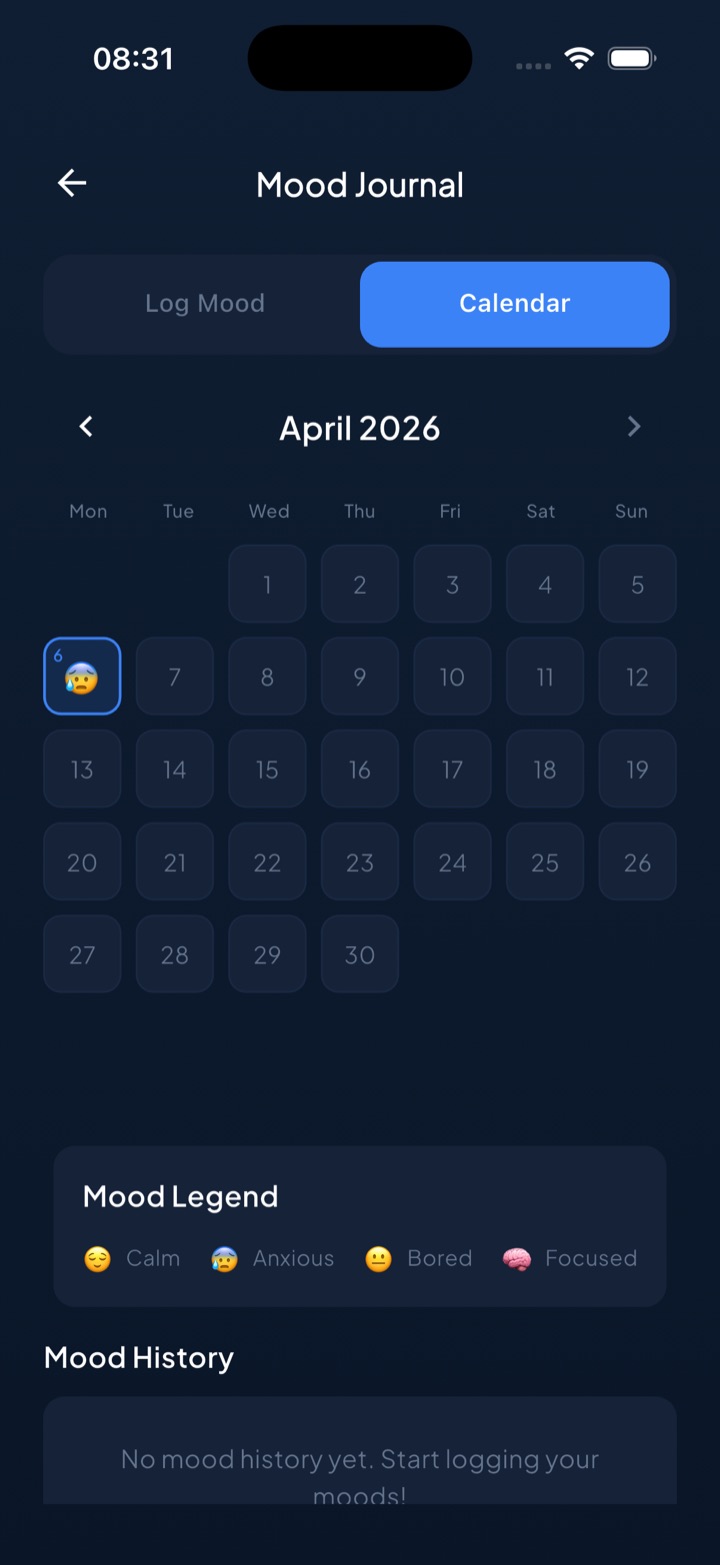
You can build all of this by hand — a login screen, a phone in another room, and a paper mood log do the same job. The app just removes the friction of doing it every day.
The takeaway: stop trying to drain your dopamine. Change what’s one tap away, make the slow rewards easy to start, and let a little boredom back into your day.
Frequently asked questions
Does a dopamine detox actually work?
Not in the way the internet describes it. You cannot deplete or reset dopamine by avoiding pleasure for a day, because dopamine is a background signaling chemical, not a fuel tank. What a break from your most stimulating, low-effort rewards can do is make slower, effortful activities feel worthwhile again. The real mechanism is behavioral stimulus control, not brain chemistry, and the benefit comes from what you build, not just what you subtract.
Can you actually reset your dopamine levels?
No. A healthy brain keeps dopamine in a tight range and regulates it automatically, so you can't empty it by skipping your phone for a weekend. What can shift over weeks is how sensitive you feel to ordinary rewards. Heavy use of fast, intense stimulation can make slower rewards feel flat by comparison, and easing off tends to restore some of that contrast. That is adaptation, not depletion, and it takes longer than one day.
What did the person who coined dopamine fasting actually mean?
Psychiatrist Cameron Sepah, who popularized the phrase, meant a cognitive-behavioral technique for reducing compulsive behaviors by limiting their triggers, not a mystical brain cleanse. His version is stimulus control: scheduling time away from specific problem behaviors like social media, gaming, or junk food. He has said publicly that the internet turned it into something he never intended, such as sitting in a dark room avoiding all light and sound.
What should I do instead of a dopamine detox?
Focus on stimulus control and effort. Make the fastest, most intense rewards harder to reach by blocking or burying the apps and keeping the phone in another room, and make slower, effortful rewards easier to start with a book on the desk or shoes by the door. You don't need a full fast. A short low-stimulation window every day does more than one heroic weekend.