You are not losing to other people. You are losing to a sampling error. Comparing yourself to those around you is old, ordinary equipment, and for most of human history it was useful. What changed is not you and not your ambition. It is the sample. A feed does not show you people’s lives; it shows you the best twenty seconds each of a thousand people had this year, sorted by how well those seconds performed with an audience. You put your ordinary Tuesday against that and get up feeling behind on your career, your body, your travel, your relationship and your kitchen. That feeling is not a character flaw. It is arithmetic, and the arithmetic is rigged.

Why does everyone online seem to be doing better than me?
Because you are not seeing a random draw of human lives. You are seeing a heavily filtered one, and it has been filtered twice.
The first filter is the person. Nobody posts the Tuesday. Nobody posts the eleven months of a renovation that consisted of arguing about quotes; they post the finished island with the light coming in from the left. The second filter is the algorithm, which promotes whatever holds attention, and what holds attention is peaks. Between the two, the median post you scroll past sits far above the median day of the person who posted it.
So the mismatch is not between your life and their lives. It is between your life and a highlight reel assembled from a thousand lives, none of which is being lived by any single person. You are, in a real sense, comparing yourself to a composite human who does not exist: someone with the promotion from one account, the body from another, the wedding in Santorini from a third and the kitchen from a fourth.
Was comparing myself to others always this bad?
No, and it is worth being precise about what changed, because the drive itself is not the problem.
In 1954 the psychologist Leon Festinger described social comparison as something people do more or less automatically. When there is no objective yardstick for how well you are doing at life, you reach for the nearest available one, which is other people. That is not vanity. It is how you work out whether your salary is reasonable, whether your kid’s sleeping is normal, whether your grief is taking too long.
It worked because of the conditions it evolved in. You calibrated against roughly the village: a hundred and fifty people whose whole lives you could see, including the divorces, the debts and the bad years. And it ended. When you left the room, the comparison stopped.
Feeds kept the drive and removed every one of those conditions.
What exactly did the feed break?
Four specific things, and it helps to name them separately because different fixes work on different ones.
Sample bias. You compare your average against everyone’s best. A highlight reel is not a life, but your nervous system does not process it as a curated sample. It processes it as evidence about how people are doing.
Scale. The village was a hundred and fifty people. The feed benchmarks you against millions, and that pool now includes professionals whose entire job is producing the highlight, with lighting, a second attempt and often a team. Somewhere in the world, on any given day, someone is having the best day of their life. The feed will find them and show them to you.
Asymmetry. You know your insides and you can only see their outsides. You are comparing your blooper reel, including the doubt and the boring middle, against someone else’s trailer. This is why the comparison survives even when you consciously know the post was staged.
Infinity. Offline, upward comparison had a floor: you left the party. The feed never runs out of people doing better than you, so there is no natural point at which the exercise concludes. You do not scroll until you feel fine. You scroll until you stop.
| What appears in the feed | What you compare it against | What is not in the frame |
|---|---|---|
| A wedding on a cliff at sunset | Your relationship after last week’s argument | Two years of planning and the cost |
| A promotion announcement | Your job at 3pm on a difficult week | The four rejections before it |
| A body in perfect light | Your body in the mirror at 7am | Twenty takes, and often a career |
| A finished kitchen | Your sink with last night’s dishes in it | The eleven months and the overspend |
| A month of travel photos | Your commute | The job that got left, or the debt |
Does research actually show this, or is it just how it feels?
Honestly: the research supports the direction, and it is more specific than the headlines suggest.
The consistent finding is about upward comparison on image-heavy platforms, which correlates with lower mood and worse body image. The effects on average are modest, and they are correlational, so the arrow can run both ways: feeling low makes passive scrolling more likely, not only the other way round. But the effects are not evenly spread. They concentrate in heavy users and, more importantly, in passive users.
That last distinction is the useful one. Posting, commenting and messaging people you actually know does not produce the same pattern as silently consuming. Same app, same minutes, different result. Which means the question to ask yourself is not how much time you spent, but what you were doing in it: exchanging or watching. If the anxiety has already generalised beyond the feed, social media and anxiety goes into that loop in more detail.
How do I actually get out of the comparison trap?
The exits that work are structural. Nothing here asks you to feel differently about yourself on demand, because that has never once worked at eleven at night.
Cut the passive dose specifically. The dose is the poison. You do not need to quit the app, you need to reduce the hours of silent consumption, which is the part that carries the effect. Keep the messaging, cut the wandering.
Do curation surgery, and use mute. Spend ten minutes identifying the accounts that reliably produce the sinking feeling, and mute them. Muting is private: no notification, no awkwardness at the next family lunch, no relationship spent. Most people find the list is shorter than they feared and weirdly specific, one ex-colleague and four strangers with a marble island.
Follow process, not highlights. Accounts that show the drafts, the failed batch, the messy middle repair the asymmetry directly, because they put back the insides you cannot see anywhere else. If your feed has drifted somewhere bleak, how to reset your algorithm is the mechanical version of this.
Write down your own unposted good moments. This is the gratitude-adjacent trick that actually has evidence behind it, with one modification: only count things nobody saw. The walk, the good conversation, the thing you fixed. You are rebuilding your own highlight reel so that it exists somewhere other than in your memory, which is where everyone else’s already lives.
Run the reality-check ritual for one week. Every time you feel behind, note what you were actually doing at that moment. Not the content, your situation. Almost everyone finds the same three coordinates: in pyjamas, after eleven, tired, comparing against a wedding in Santorini. The comparison never happens when you are busy and it never happens at ten in the morning, which tells you something the content itself never will.
“I spent about a year quietly furious about kitchens. Not my career, not my relationship. Kitchens. One evening I muted eleven accounts, which took four minutes and which nobody found out about, and most of the feeling left with them. It turned out I did not want a marble island. I wanted to stop being shown one at eleven at night.” — Priya, dental hygienist, 34
What if I still feel behind after all that?
Then check whether the feeling is distortion or information, because it can be either.
Diffuse envy that arrives at midnight and covers everything at once, career and body and travel and kitchen, is almost always an artifact of the sample. It goes when the scrolling goes. But a specific ache about a specific thing you actually want, the one that is still there on a Saturday morning with your phone in another room, is worth listening to. That is not the comparison trap. That is a want, and wants can be acted on.
What does not help either way is turning it on yourself. Deciding you are shallow for minding is just a second problem stacked on the first, and why shaming yourself doesn’t work covers why that particular move backfires so reliably. If the app in question is one specific one, how to quit Instagram addiction is the narrower version, and what is JOMO is the reframe for the nights you decide to miss on purpose.
How does Unscrol help?
The honest starting point: a lot of this is free. Apple’s built-in Screen Time gives you daily App Limits per app or category, Downtime for scheduled windows, and a real weekly average so you can see how many hours of passive scrolling you are actually doing. Muting accounts is free and takes ten minutes. If a daily number plus a cleaner feed is enough to stop the eleven o’clock spiral, you do not need anything else and should not buy anything. Where the built-in tools run out is the shape of the problem: App Limits are one cumulative daily budget that arrives long after the damage, they ship with a one-tap dismissal, and iOS has no native cap on a single sitting.
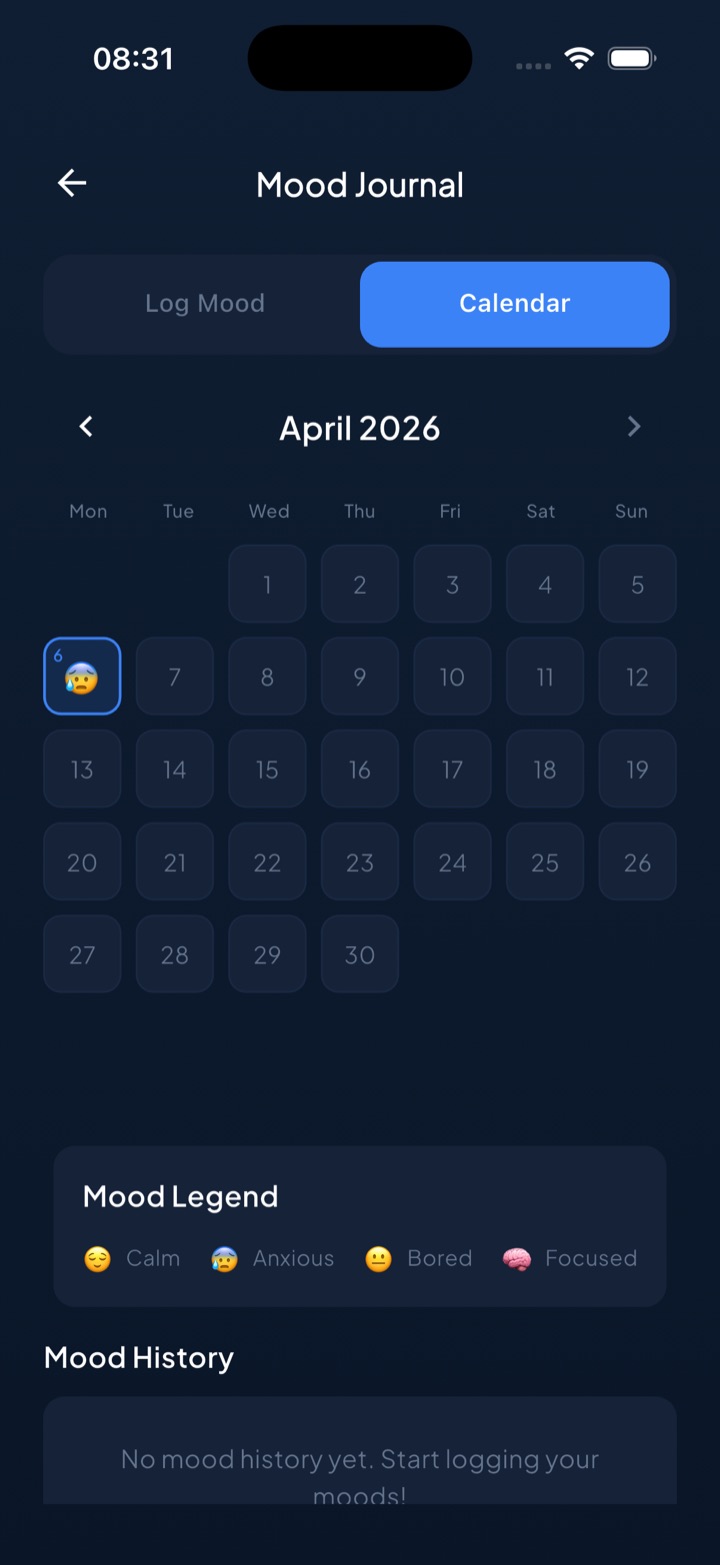
Unscrol is an iPhone and Apple Watch app built on two numbers that map onto exactly the passive-use problem. You set a daily total (45 minutes by default), which caps the silent-scrolling hours where comparison does its damage, and a per-session maximum (5 minutes by default), which ends the gallery wander before the behind feeling has time to compound. Both run through Apple’s Screen Time and FamilyControls frameworks rather than a cosmetic overlay. Spend a session-sized chunk of the budget and the chosen apps lock for 15 minutes; spend the whole daily budget and they lock until tomorrow. Shield is scheduled blocking by time of day, useful because most people’s comparison hour is predictable, and switching it off mid-block is deliberately slow: a breathing exercise and a wait, not a one-tap dismissal. A streak counts every day you stay under budget, and home-screen and lock-screen widgets show what is left without you opening anything.
Two caveats, plainly. The numbers are estimates, because iOS reports usage through crossed thresholds across an interval rather than exact minutes, so treat the budget as approximately right rather than precise to the second. And iOS hands the app opaque tokens, never app identities: Unscrol cannot see which apps you picked, their names or your per-app usage. The system draws the app picker; the app only draws the frame around it, and block lists and usage data stay on-device and never reach Unscrol’s servers. Free to download, with an optional premium tier adding Streak Saver for a missed day and five concurrent challenge slots instead of one.
Frequently asked questions
Why does social media make me feel bad about myself?
Because the comparison you are making is structurally unfair, not because you are ungrateful or fragile. Everything in the feed has been filtered twice: once by the person who posted it, who chose their best moment out of a whole year, and once by the algorithm, which promotes whatever performed well, and what performs well is peaks. So you end up comparing your ordinary Tuesday against a thousand people's single best day, while knowing every doubt and delay inside your own life and none of theirs. The feeling of being behind is the correct output of a rigged calculation, which is why arguing yourself out of it rarely works and changing the inputs usually does.
Is it how much time I spend on social media, or how I spend it?
Both, but the how matters more than most people expect. Research on this keeps landing on the same distinction: passive use, meaning scrolling and looking without interacting, tracks with worse mood and more envy, while active use, meaning messaging, commenting and actually exchanging things with people you know, does not show the same pattern and sometimes goes the other way. The same forty minutes can be forty minutes of talking to three friends or forty minutes of silently watching strangers succeed, and those are not the same experience wearing different labels. The practical version is that you do not necessarily need to quit anything. You need to cut the silent-consumption hours specifically, because that is where the damage concentrates.
Does unfollowing or muting people actually fix the comparison trap?
It helps more than almost any mindset trick, and muting is better than unfollowing because it is completely private, so nobody gets an alert and no relationship gets damaged. Mute the specific accounts that reliably produce the sinking feeling, and you remove the trigger rather than trying to out-argue it after it fires. The limitation is that curation alone does not hold if your passive scrolling time stays the same, because recommendation feeds refill the gap with strangers who perform even better than the people you just muted. Curation changes what you see; a time limit changes how long you stay in the place where it is shown.
Is comparing myself to other people always bad?
No, and this is the part worth keeping. Leon Festinger described social comparison in 1954 as a basic human drive: when there is no objective way to measure how you are doing, you measure against other people, and for most of human history that worked as calibration rather than punishment. Comparison is still useful when the person is reachable, when you can see their process rather than only their result, and when the comparison ends and you go back to your own life. What breaks it is a sample that only contains finished results, at a scale that never runs out, from people you will never actually meet.