Feeling bad about your screen time does not reduce your screen time. It reliably reduces how often you look at it. Self-criticism produces avoidance, and avoidance is the behaviour that ends with the report unopened, the notifications muted, and the tracking app deleted while the habit sits there completely intact. The research points one way with unusual consistency: people who forgive themselves after a lapse do better next time, not worse. Shame is the weakest tool in the entire digital wellbeing toolkit, and it is the one almost every product reaches for first.

What is the difference between guilt and shame here?
The distinction is not semantic, and it does most of the work in this article.
June Tangney’s research separates two responses to the same event. Guilt is about the behaviour: I did a bad thing. Shame is about the self: I am a bad thing. Guilt keeps the problem outside you, where you can reach it, and motivates repair. Shame moves it inside you, where you can do nothing about it before bed, and motivates hiding.
Apply it to a Tuesday night:
- “I scrolled from ten until one and I did not want to.” That is guilt. It names a window of time, a behaviour, and a preference. There is something to do with it.
- “I have no self-control, I am pathetic, I always do this.” That is shame. There is nothing to do with it.
Guilt has a next action. Shame has an exit. And the exit is usually the app.
What does the research say about self-criticism versus self-compassion?
The common intuition is that being hard on yourself is the responsible option and going easy is how you end up worse. The evidence does not support it.
Michael Wohl and colleagues followed students through two exams. Those who forgave themselves for procrastinating before the first procrastinated less before the second. The students who stewed in self-blame stayed stuck, because the subject itself had become painful to approach.
Juliana Breines and Serena Chen ran a related experiment after an induced failure. Participants prompted toward a self-compassionate response spent more time preparing for a second attempt than those prompted toward self-esteem boosting or nothing at all. Kindness increased effort rather than replacing it. Kristin Neff’s broader work lands in the same place: self-compassion tracks with personal accountability and lower fear of failure, not with lower standards.
These are modest, mostly laboratory effects and worth holding loosely. But note what does not exist anywhere in this literature: evidence that self-attack outperforms self-kindness at producing behaviour change. The same argument runs through why motivation follows action.
Why does a guilt-based app end up deleted?
Health communication has studied frightening messages for decades, and the finding is stable: a fear message only changes behaviour when it arrives with an action the person believes they can take. Without that, the standard response is defensive — deny it, avoid it, or reject the messenger.
A weekly screen time summary is a fear message with no action attached. 6h 41m. Up 12% from last week. A diagnosis without a prescription, delivered on a Sunday morning to someone who already feels bad about it. So the cheapest way to stop feeling bad is not to use the phone less. It is to stop receiving the message.
That is the failure mode, and it is a design failure rather than a user failure: a bad day becomes a deleted app. Nothing about the habit is removable in one tap. The report is. A few weeks later it reinstalls on a fresh burst of motivation and runs the loop again — the cycle described in why you keep redownloading the apps you deleted.
“The Sunday summary was the worst notification on my phone. Seven hours twelve minutes, up 22 percent. I would feel sick for ten minutes, promise myself Monday would be different, and by Wednesday I was back where I started. I deleted the tracker after a bad week in February and honestly felt better within about a minute — which tells you exactly what it had been doing for me.” — Priya, 33, hospital pharmacist
What does non-punitive design actually look like?
The alternative is not a softer app that congratulates you constantly. It is one that stops commenting on your character and confines itself to facts and consequences.
| Punitive pattern | What it produces | Non-punitive version |
|---|---|---|
| A weekly total with no next action | Dread, then avoidance of the report | A budget for today, with what is left visible now |
| Red screens and ‘you failed’ copy | Defensiveness; the app becomes an accuser | A neutral state change: the app locks, nothing is said |
| A streak that resets to zero with no recovery | The what-the-hell spiral after one miss | A limited rescue for a single missed day |
| Notifications that comment on your character | Muting, then deleting | Notifications that state a fact and stop |
| A public rank against other users | Comparison, which is usually the original problem | Comparison against your own last week only |
| Framing use as a moral failure | Shame, then avoidance | Framing use as a budget you chose to spend |
The line that matters most: the most humane thing a blocking app can do is act without commenting. A lock that simply happens is information. A lock that also tells you what it thinks of you is a small punishment, and punishment is the thing that gets uninstalled.
Isn’t self-compassion just letting yourself off the hook?
It is the fair objection, and it deserves a direct answer rather than a reassuring one.
No — because the standard and the self-attack are separate dials, and only one of them does useful work. You can keep a hard rule and drop the commentary, and that combination is the strongest one available: be strict with the schedule and gentle with the person.
A real limit should not be gentle at all. A system-level lock that holds when you want to break it is genuinely inflexible, and that is the point — the whole argument in why screen time limits don’t work is that a dismissible limit is not a limit. Non-punitive does not mean permissive. It means the rules are rigid and the narration is silent.
The practical test: after a heavy night, which version of you shows up tomorrow? The shamed one usually does not show up at all.
What should you actually do after a bad day?
- Describe the behaviour, not yourself. I scrolled from ten until one. Specific, small, finished.
- Ask what the day was like before you ask what you did wrong. Heavy phone nights track stress, boredom, loneliness and avoided tasks far more reliably than they track willpower — and you are also up against deliberate design.
- Protect tomorrow instead of relitigating yesterday. The day after a lapse decides everything, which is the whole logic of the never miss twice rule.
- Lower the bar for a day counting rather than raising the punishment. A rule you can keep on a bad Tuesday beats one you keep for nine days and abandon.
- Change one thing in your environment, not one thing about your character. Environments hold. Midnight resolutions do not.
If you have already spiralled after losing a run of good days, that collapse is covered in what happens when you lose your streak. If your app also ranks you against strangers, that is a separate problem with the same emotional signature — see do leaderboards actually help you cut screen time.
How does Unscrol help?
Credit where it is due first: Apple’s built-in Screen Time does not scold you. Its weekly report is a plain number, its App Limits state a fact, and all of it is free and already on your iPhone. If a neutral number plus a limit you personally respect is enough, that is the whole answer and you should not download anything. Screen Time’s weakness is not its tone — it is that the Ignore Limit button hands the decision straight back to the version of you least able to make it.
Unscrol is an iPhone and Apple Watch app built on the same Apple frameworks, arranged so the enforcement is strict and the commentary is absent. You pick two numbers: a daily total and a per-session maximum. Use a session-sized chunk of the budget and your chosen apps lock for 15 minutes. Spend the whole daily budget and they lock until tomorrow. Nothing is said about you in either case; a number ran out and a door closed.
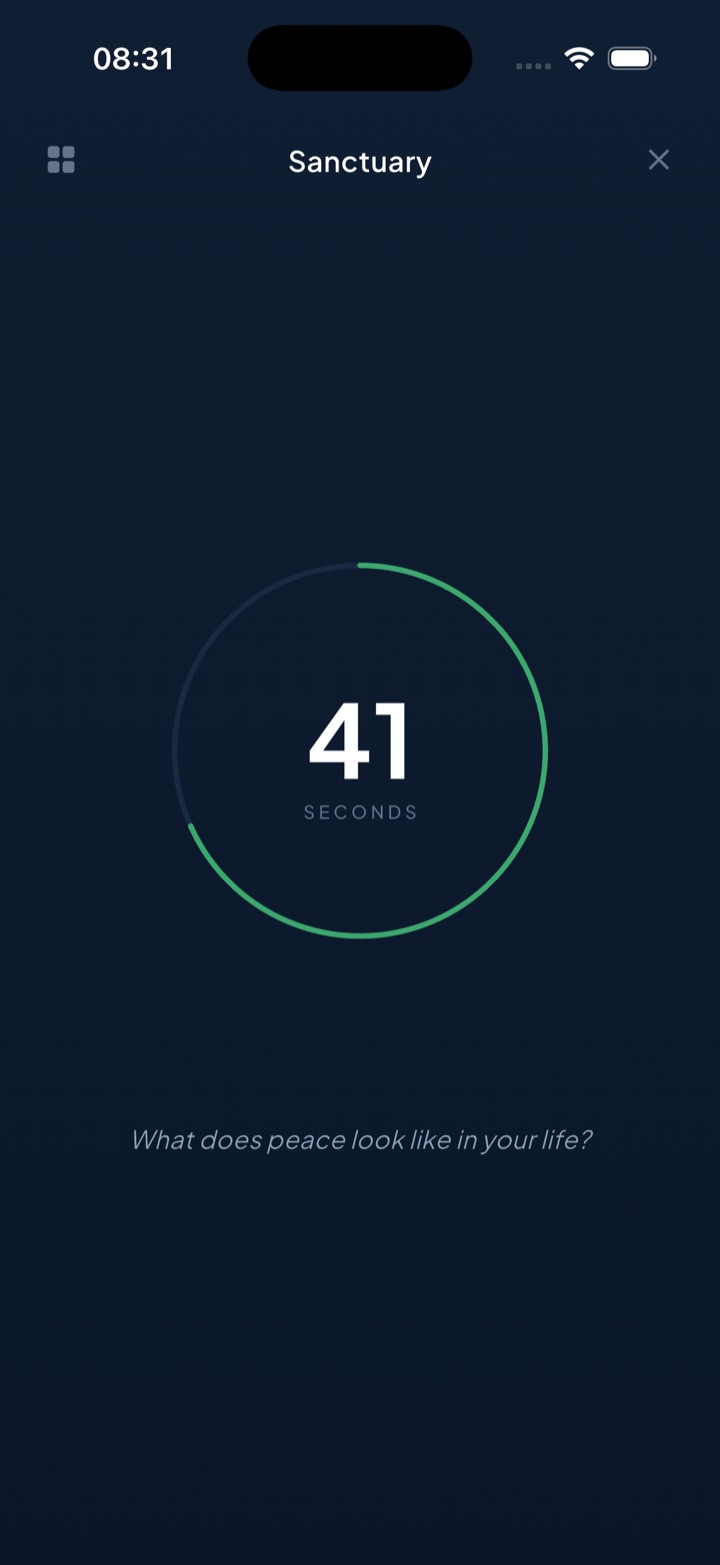
Around that, Shield blocks by schedule and is deliberately slow to switch off mid-session — a breathing exercise and a wait, not a one-tap dismissal. Mind Break is a one-minute reflection rather than a lecture. A streak counts every day you stay under budget, and Streak Saver on the premium tier rescues a missed day, so one bad evening cannot zero a month.
One structural detail matters here specifically: Unscrol cannot see which apps you picked. iOS hands it opaque tokens, never app names, icons or identities, and the system itself draws the picker. Block lists and usage data are processed on-device by iOS and never reach Unscrol’s servers, and the figures are estimates from crossed thresholds rather than exact minutes. Free to download; the optional premium tier adds Streak Saver and five concurrent challenge slots instead of one.
Frequently asked questions
Does feeling guilty about my screen time actually help me use my phone less?
Almost never, and it often makes things worse. Guilt aimed at a specific behaviour can be useful because it points at something you can change tonight. Shame aimed at yourself does the opposite: it produces avoidance, and the first thing avoided is the evidence. That is why people stop opening their weekly report, mute the app, and eventually delete it while the habit itself continues untouched. Studies on self-forgiveness after a lapse consistently find that people who let go of the self-blame perform better next time, not worse.
What is the difference between guilt and shame when changing a habit?
Psychologist June Tangney's research draws the line clearly: guilt is about behaviour, roughly 'I did a bad thing,' while shame is about the self, roughly 'I am a bad person.' Guilt tends to motivate repair, correction and trying again, because the problem is a thing you did. Shame tends to motivate hiding, withdrawal and defensiveness, because the problem is you. For screen time this matters enormously. 'I scrolled from ten until one and I did not want to' has a next step. 'I have no self-control' has no next step at all.
Why do I keep deleting my screen time tracking app after a bad week?
Because the app is the only part of the situation you can remove in one tap. A big weekly number with no specific action attached works like a fear message with no escape route, and health-communication research shows those reliably produce defensive avoidance rather than change: people reject the message or the messenger. The habit is not deletable. The report is. So a bad week ends with an uninstall and a small, immediate feeling of relief, which is exactly the wrong thing to have reinforced.
How do I stop beating myself up about my phone use?
Separate the standard from the self-attack, because they are different dials. Keep the rule strict and drop the commentary. In practice: describe the behaviour rather than your character, ask what the day was like before asking what you did wrong, protect tomorrow instead of relitigating yesterday, and change one thing in your environment rather than one thing about your personality. Self-compassion here is not permissiveness. Research on self-compassionate responses to failure finds people put in more effort afterwards, not less.