Your blue-light glasses are almost certainly not what stands between you and a decent night’s sleep. When researchers pooled the randomised trials, including a Cochrane review of blue-light-filtering spectacle lenses, the honest summary was that these lenses probably make little or no difference to eye strain, and that the sleep evidence was too thin to support what the boxes claim. That is not a reason to conclude light at night is harmless, because it clearly is not. It is a reason to notice that the thing you bought filters the least important variable in the room. What keeps you up at one in the morning is not a wavelength. It is the next clip.

What do the studies actually say about blue-light glasses?
They say the effect is small enough that it keeps vanishing as the studies get better.
The most reliable summaries come from systematic reviews that pool many randomised trials rather than from any single headline study. A Cochrane review of blue-light-filtering spectacle lenses concluded they probably make little to no difference to visual fatigue during computer work in the short term, and that the evidence on sleep-related outcomes was too limited and inconsistent to draw a confident conclusion. Other reviews of blue-light-filtering interventions have landed in roughly the same place: effects that are small, inconsistent between studies, and frequently absent once the comparison is a plausible placebo lens rather than no lens at all.
Two things are worth holding onto here. A null result is not the claim that blue light does nothing to human physiology. It is the much narrower claim that this product, worn this way, in front of these screens, at these brightnesses, did not produce a difference anyone could measure. And the dramatic studies people cite as proof usually involved very bright light for hours, from a light box or a laboratory rig, not an OLED panel at thirty percent brightness.
Why does screen eye strain have nothing to do with colour?
Because the symptoms of a long screen day are mechanical rather than spectral.
When you stare at a screen you blink roughly half as often as normal, and the blinks you do manage become less complete. That dries out the tear film, and a dry tear film is exactly the burning, gritty, heavy-lidded sensation most people are describing when they say their eyes hurt. Separately, your focusing muscles hold one fixed near distance for hours at a stretch, which produces the dull ache and the moment of blur when you finally look up at something across the room.
Neither of those has anything to do with the blue end of the spectrum. Tint the display amber and you will still blink too little, and still hold the same focal distance for the same number of hours. Which is why the intervention that does have support is embarrassingly low-tech: the 20-20-20 rule has you look at something far away at regular intervals, because it targets the mechanism that is actually causing the symptom.
How did a real mechanism turn into a product category?
By stretching a true sentence exactly one step too far.
Here is the true part. Your retina contains melanopsin-containing cells that are most sensitive to short-wavelength light, and bright light in the evening does suppress melatonin and shift the timing of your body clock. That is real, well-replicated physiology, and it is why the story is so persuasive.
The stretch happens across three quiet leaps. If blue light suppresses melatonin, then screens must be suppressing yours. If screens suppress it, then removing blue from screens should restore it. Therefore a lens or a software filter is a sleep intervention. Every one of those arrows loses something. A phone at reading distance delivers a small fraction of the light that a laboratory rig does. A filter removes some, not all, of the short-wavelength output. And the melatonin shift was never the main route by which your phone wrecks your night.
Does light at night matter at all, then?
Yes, and this is where the honest version of the article lives.
Light at night is real and worth managing. It simply responds to dose far more than to colour. The variables that scale the dose are intensity, duration, distance and how late it happens, and a colour filter touches none of them. A filtered screen at full brightness, held twenty centimetres from your face at midnight, is still a floodlight as far as your circadian system is concerned. You changed the colour temperature and left every dial that matters exactly where it was.
The practical version is unglamorous: dim everything, increase the distance, and shorten the exposure. Those three do more than any tint on the market, and they are free.
What is actually keeping you awake at 1am?
Two things a lens cannot reach: displacement and arousal.
Displacement is the boring one, and it is the biggest by a distance. Time spent scrolling in bed is time subtracted from the hours available for sleeping. Sleep researchers looking at evening screen use keep finding that the strongest pathway runs through the clock rather than the spectrum, because an hour in the feed is an hour of sleep you did not get. Revenge bedtime procrastination is displacement with a motive attached: the night is the only part of the day nobody else has a claim on, so you spend it.
Arousal is the second. What is on the screen is engineered to lift your alertness slightly and to end each unit on an unresolved hook, which is the opposite of what a person falling asleep needs. An argument in the comments, a cliffhanger, a competitive match, a message you now feel obliged to answer. All of that is completely wavelength-independent. Amber-tinting an argument does not make it less of an argument, and gaming before bed is the extreme case: the same photons, a far higher heart rate.
Put the three pathways in order of how much they explain, and it goes displacement, arousal, then light. The accessory you bought addresses the third one.
Which sleep interventions are worth the money?
| Intervention | What the evidence says | Verdict |
|---|---|---|
| Blue-light-filtering lenses | Pooled trials, including a Cochrane review, found little to no effect on eye strain and no clear sleep benefit | Comfort item, not treatment |
| Night Shift or a warm display mode | Changes colour temperature, leaves brightness, duration and content untouched | Pleasant, negligible |
| Dimming the screen and increasing distance | Directly reduces the light dose reaching the eye, which is the variable that actually scales | Free, worth doing |
| Looking away at regular intervals | Targets blink rate and focusing fatigue, the real causes of screen eye strain | The eye-strain answer |
| Ending screen use 45-60 minutes before bed | Removes light, arousal and displacement in one move | Strongest single change |
| Charging the phone outside the bedroom | Removes the 3am relapse and the pre-sleep session that starts it | High effort, high return |
The row that quietly indicts most sleep setups is the last one against the first. People will spend real money on lenses and then keep the phone on the pillow, which is a bit like buying a water filter and drinking from the tap.
“I own the amber glasses, the warm bulbs, all of it. Night Shift on a schedule, brightness on the lowest setting the phone allows. And I was still awake at one in the morning five nights a week, feeling virtuous about it because the screen was orange. What finally worked was stupidly simple: the phone charges in the kitchen now. The first week was miserable. I am asleep by half eleven and the glasses live in a drawer.” — Marcus, data analyst, 34
What actually works, in order?
Protect the sleep window first. Screens out of the last forty-five to sixty minutes beats every filter on the market, because it removes all three pathways at once rather than tinting one of them. This is the change with the best return and the one people skip, and screen time and sleep goes through why the window matters more than the total.
Then dim and step back. Lowest comfortable brightness, warm room lighting, and the screen at arm’s length rather than on your nose. You are reducing the dose, which is the part the filter never touched.
Then move the charger. The bedroom charging rule is the one habit that reliably ends both the pre-sleep session and the 3am one, because it converts a reflex into a walk to another room. That is the 20-second rule applied to the one place it matters most.
Then deal with the last app. If you get into bed and the reflex still fires, the problem is a specific app and a specific moment, and how to stop scrolling in bed is about that moment specifically.
Are blue-light filters ever worth keeping?
Yes, with the claim downgraded. A warm screen in a dark room genuinely is more comfortable to look at, and some people find tinted lenses reduce glare fatigue under harsh office lighting. Comfort is a legitimate reason to own something. It just is not a therapeutic one, and it should not be the item you rely on when you are trying to fix your sleep.
None of this is medical advice. If you have been sleeping badly for months, or you lie awake despite doing everything above, that is worth taking to a doctor or a sleep clinician rather than to a shopping cart. Persistent insomnia has treatments that work, and they are not accessories.
How does Unscrol help?
The honest starting point: Apple gives you a fair amount of this for free. Night Shift is built in, if you want the warm screen for comfort. More usefully, Downtime lets you schedule a window in the evening where most apps go away, and Screen Time will show you a real weekly average to argue with. If a scheduled evening window is enough to get you off the phone before bed, you do not need anything else and should not buy anything. Where the built-in tools run out is enforcement: Apple’s limits ship with a one-tap dismissal, and at midnight the person tapping it is not the person who set it.
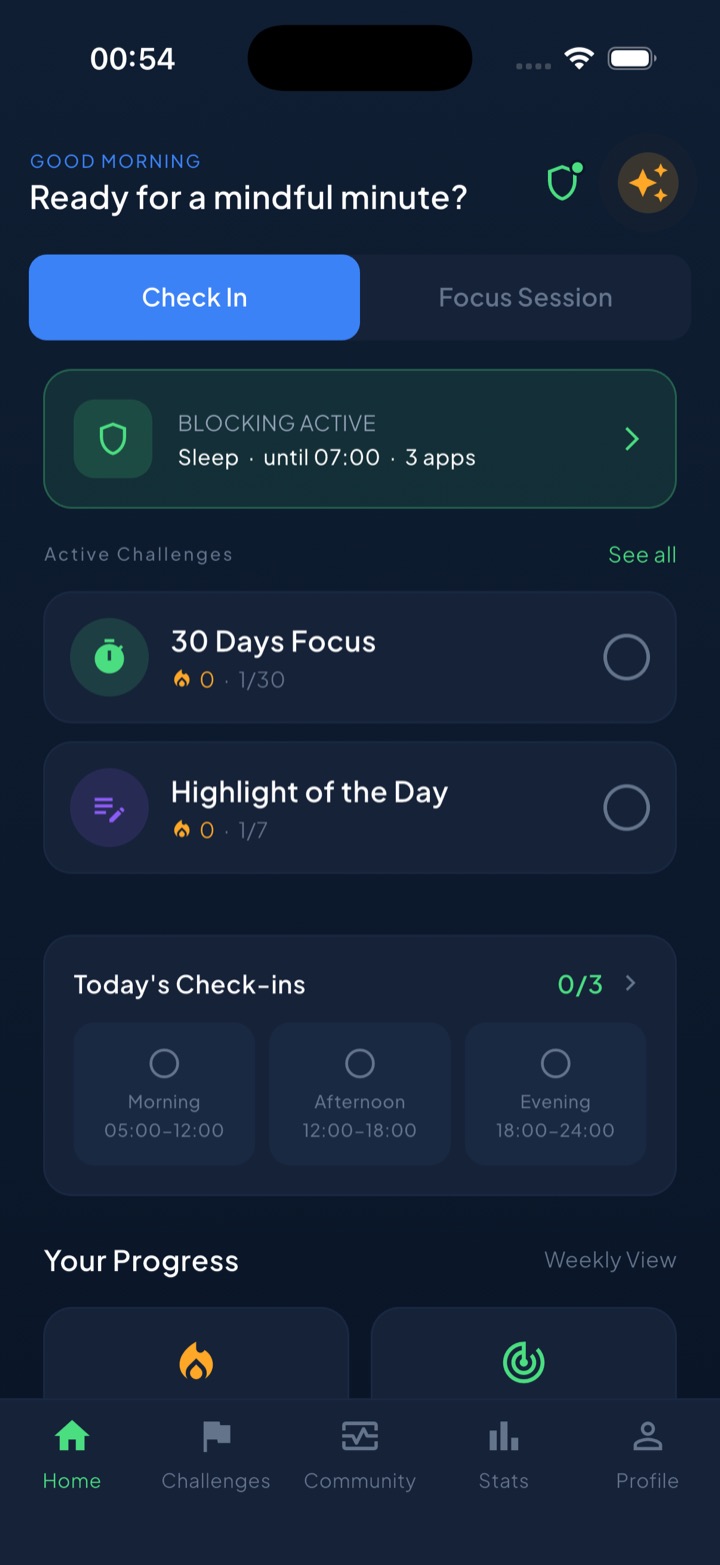
Unscrol is an iPhone and Apple Watch app built on Apple’s own Screen Time and FamilyControls frameworks, and it exists for exactly the point this article has been circling: the fix was never the colour of the light, it was ending the session. Shield is scheduled blocking by time of day, so you can put a real wall across your last hour before sleep, and switching it off mid-block is deliberately slow on purpose: a breathing exercise and a wait, not a dismissal. For the rest of the day you set a daily total (45 minutes by default) and a per-session maximum (5 minutes by default). Spend a session-sized chunk of the budget and the apps you chose lock for 15 minutes; spend the whole daily budget and they lock until tomorrow. A streak counts every day you stay under budget, and home-screen and lock-screen widgets show what is left without you opening anything.
Two caveats, plainly. The usage numbers are estimates, because iOS reports crossed thresholds across an interval rather than exact minutes, so treat the budget as approximately right rather than accurate to the second. And iOS hands the app opaque tokens rather than app identities: Unscrol cannot see which apps you picked, their names or their icons, and your block lists and usage data are processed on-device and never reach Unscrol’s servers. The system draws the app picker; the app only draws the frame around it. Free to download, with an optional premium tier adding Streak Saver for a missed day and five concurrent challenge slots instead of one.
Frequently asked questions
Do blue light glasses actually work?
Not for the things they are sold for. When researchers pooled the randomised trials, including a Cochrane review of blue-light-filtering spectacle lenses, they found the lenses probably make little or no difference to eye strain from screen use, and the evidence for better sleep was too thin and inconsistent to support the marketing. That is a finding about the product, not about light itself. Light at night genuinely does affect your body clock, but the amount, the duration and how close the screen is to your face matter far more than its colour, and none of those are changed by a tint.
If blue light is not causing my eye strain, what is?
Two mechanical things, both unrelated to wavelength. You blink around half as often when you are staring at a screen and your blinks become less complete, which dries the tear film and produces the burning, gritty, tired feeling most people call eye strain. At the same time your focusing muscles hold a single close distance for hours without a break, which causes the ache and the blur when you finally look up. Amber-tinting the screen changes neither one, which is why the intervention with real support is simply looking away at regular intervals.
Does Night Shift or a warm screen filter help me sleep?
Barely, and not for the reason you think. Night Shift shifts the colour temperature of your display but leaves brightness, duration, viewing distance and content exactly where they were, and those are the variables that scale the actual dose of light reaching your eye. A warm screen at full brightness twenty centimetres from your face at midnight is still a bright light source late at night. Warm modes are pleasant to look at in a dark room, and that is a legitimate reason to use one, but treat it as comfort rather than as a sleep treatment.
So what is actually keeping me awake if it is not the blue light?
Two pathways the glasses cannot touch. The first is displacement, which is by far the biggest: the hour you spend in the feed is subtracted directly from the hours you had available for sleep, and no filter gives that time back. The second is arousal, because the content is built to raise your alertness slightly and end each unit on an unresolved hook, whether that is an argument in the comments, a cliffhanger or a competitive match. Light is real but comes third, which is why filtering it while still scrolling until 1am changes almost nothing.