If your consumption does not turn into a started task within ten minutes, it was entertainment. Productive procrastination is the internet’s most respectable addiction, because it arrives with a receipt: you were learning, researching, optimising, preparing. The trouble is that your brain pays out most of the reward for watching someone else work, and the thing you were avoiding is still sitting there, exactly as unstarted as it was three hours ago. This is not a discipline problem. It is a feed that learned to dress up as ambition.

Why does watching someone else work feel like working?
Because almost every part of the reward arrives before any of the work does.
Three things happen at once. Vicarious progress: a four-hour study-with-me timelapse hands you the shape of a productive session, the setup, the grind, the finish, without the friction that makes real study feel bad. Your attention followed a complete arc of effort. It simply wasn’t your effort.
Planning dopamine: deciding how you will do the thing is genuinely pleasurable and it pays out immediately. Choosing a revision method, mapping the syllabus, picking the app, each one delivers a small hit of sorted. Doing the first problem set pays nothing for twenty minutes and hurts for the first five.
Identity consumption, which is the strongest of the three. Watching people who study makes you feel like a person who studies. You are buying the self-image wholesale instead of earning it retail, and because that identity is quietly the point of the work, satisfying it directly removes most of the pressure that would have made you open the book.
Together they let you finish an evening feeling like you had a productive day, having produced nothing. That feeling is the trap. Three hours on TikTok would at least have left you knowing you procrastinated, and no motivation to study is a far easier problem than motivation that has already been spent on a substitute.
What is productivity porn?
Content about doing work that functions as a replacement for work.
You know the genres. The desk setup tour, where a second monitor arm becomes the reason nothing has been written. The Notion or Obsidian second-brain build, which can absorb an entire semester in tagging systems for notes you have not taken. The morning routine video, offering someone’s 5am as the missing prerequisite for your 10am. StudyTok, where the aesthetic of a highlighted page has fully detached from anything written on it.
The tell they share: each one lets you work on the system instead of the task. A system is infinitely improvable, has no deadline, and never tells you it is wrong. The essay is due Thursday and can be bad. Given a choice between a task that can fail and a system that cannot, you will pick the system every time, and you will feel productive doing it.
This is also why the trap survives contact with good advice. Watching a video about beating procrastination is itself a comfortable way to procrastinate, and no video fixes that, including a hypothetical one about this article.
How do I tell preparation from procrastination?
Use the ten-minute rule, and be honest for the ninety seconds it takes.
Does this consumption convert into a started task within ten minutes of the video ending? Not a planned task. Not a scheduled one. A started one: cursor in the document, first question attempted, first paragraph written badly.
If yes, it was preparation. If no, it was entertainment, and calling it entertainment is the whole intervention. The content loses its cover the moment you stop crediting it as work. You are allowed to watch study-with-me videos for fun. You are not allowed to count them.
Two supporting questions, if you want them. Would you still watch this if you already knew what it said? If yes, you are watching for the feeling rather than the information. And what did you apply from the last one? If you cannot name a single thing you took from the previous six videos in this genre, the seventh will not be different.
Looks like work vs is work
| Looks like work | Is work | |
|---|---|---|
| What it produces | Notes, plans, tabs, systems | A worse first draft than you wanted |
| How it feels | Calm, competent, in control | Uncomfortable, uncertain, slow |
| When the reward lands | Immediately | Afterwards, and smaller than expected |
| Can it fail? | No, a system can always be improved | Yes, which is why you are avoiding it |
| It ends when | You get bored or it is bedtime | The task is done or the box closes |
| Evidence tomorrow | A watch history | A file with a timestamp |
The row that matters is the fourth. You are not avoiding effort, you are avoiding the possibility of doing it badly. Productivity content is attractive precisely because it is effort with the risk taken out. That is also why try harder does nothing here: you are already trying hard, at the wrong thing, on purpose.
“I had forty-one tabs open about revision techniques and eleven days until finals. I could explain the difference between active recall and spaced repetition and I had not done a single past paper. What broke it was a rule my flatmate gave me: watch one, do one. I could watch anything I liked as long as I did a past paper first. It turned out I stopped wanting to watch them.” — Priya, third-year law student, 21
What actually gets me started?
A ladder, smallest rung first. Take the lowest one that works and stop there.
The two-minute rule. Shrink the task until starting is embarrassing rather than daunting: open the document and write one bad sentence, do one question, read one page. Beginning is the only part your brain is defending against, and it costs almost nothing once it is that small. The two-minute rule works here because the resistance was never about the size of the task.
Watch one, do one. Consumption gets paid for with production, in that order. One video, then one real unit of work before the next. It converts the feed from a substitute into a reward, which is the only role it can hold safely.
Time-box the planning. This is the important rung. Planning is a task with an end, not a mode you live in. Fifteen minutes on the clock; whatever exists when it stops is the plan, and then you run it, imperfectly, without a better system. If you keep re-planning, you are not planning, you are hiding. Implementation intentions close this faster than any tool, because they ask when and where, not how.
Do the hardest thing first. Put the real task before any input at all, in the first block of the day, when your capacity for elaborate avoidance is lowest. Eat the frog exists for exactly this category of avoidance.
Block the inspiration apps during your actual work hours. People skip this rung because using it feels like an admission. It is one. The rungs above it are all decisions you have to make while tempted, and you make poor decisions while tempted, which is the entire argument for setting the schedule when you are calm and letting it apply when you are not.
Isn’t some productivity content genuinely useful?
Yes, and pretending otherwise is how people bounce off this advice.
Study techniques have real evidence behind them, and studying effectively is a learnable skill rather than an innate one. The problem is dosage and timing, not existence. Roughly: one input, then weeks of application. You do not need a new method until the current one has demonstrably failed on real work, and it cannot fail if you never ran it.
The other honest cost is the switching. Every time you break off for one quick video about focus, you pay a re-entry tax on the work you were doing, and context switching makes that cost much larger than the minutes on the clock suggest. The video was six minutes. The interruption was twenty.
How does Unscrol help?
The honest starting point: the diagnosis is free. Apple’s Screen Time already tells you how many hours went to YouTube and TikTok last week, and if seeing that number written down is enough to change what you do on Monday, you need nothing else and should buy nothing. It also gives you daily App Limits and Downtime for a sleep window. Where the built-in tools run out is enforcement during the hours you meant to work: App Limits are a daily total that is usually spent by lunchtime, and they ship with a one-tap dismissal that is trivially easy to take when the alternative is starting an essay.
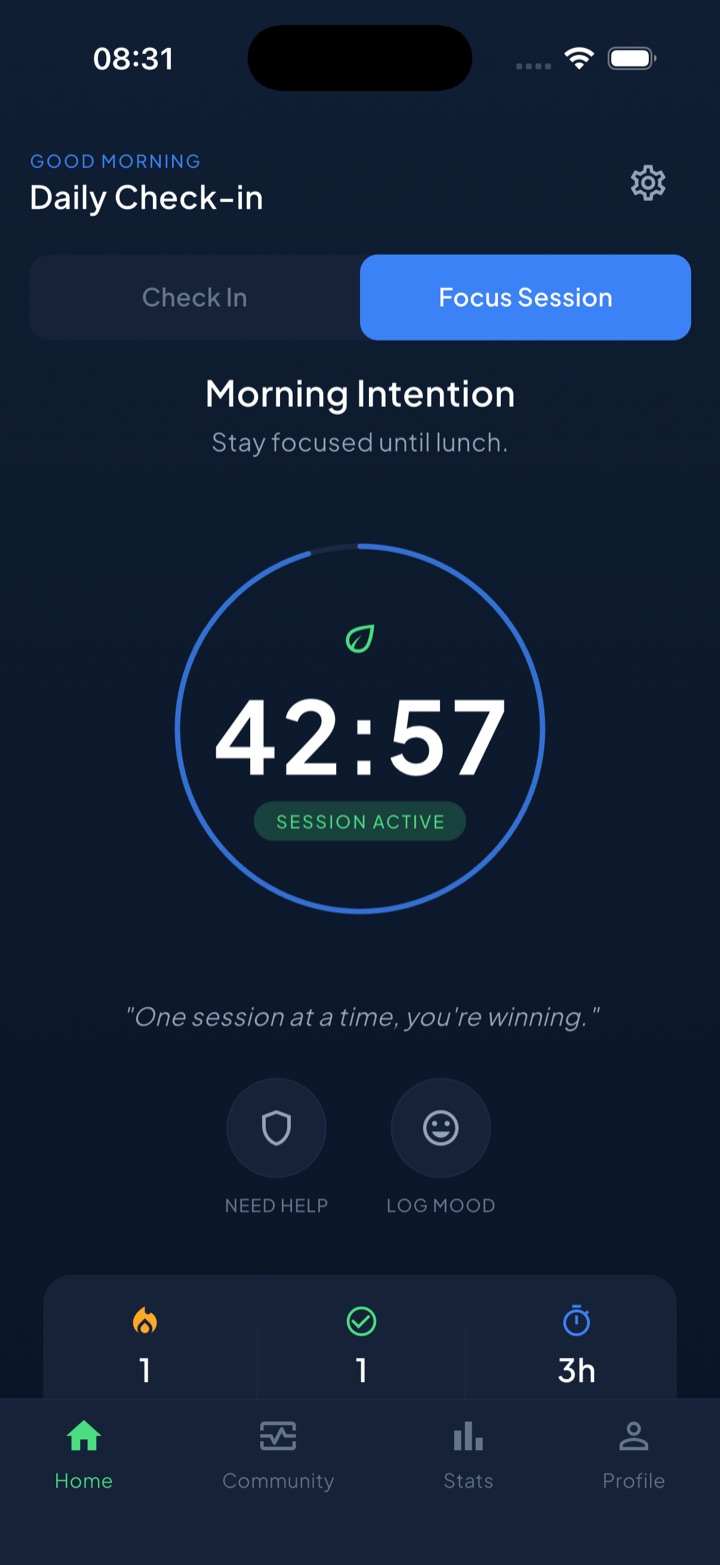
Unscrol is an iPhone and Apple Watch app built around two numbers and a schedule. You set a daily total (45 minutes by default) and a per-session maximum (5 minutes by default), and iOS enforces both through the Screen Time and FamilyControls frameworks rather than a cosmetic overlay. Spend a session-sized chunk of the budget and the chosen apps lock for 15 minutes; spend the whole daily budget and they lock until tomorrow. The part that matters for this particular habit is Shield, scheduled blocking by time of day: you draw your real study hours once, YouTube and TikTok are simply not available inside them, and switching the block off mid-session is deliberately slow, a breathing exercise and a wait rather than a one-tap escape. A streak counts every day you stay under budget, and home-screen and lock-screen widgets show what is left without you opening anything.
Two caveats, plainly. The usage numbers are estimates, because iOS reports crossed thresholds across an interval rather than exact minutes, so treat the budget as approximately right rather than accurate to the second. And iOS hands the app opaque tokens rather than app identities: Unscrol cannot see which apps you picked, their names or their icons, and block lists and usage data are processed on-device by iOS and never reach Unscrol’s servers. The system draws the app picker; the app only draws the frame around it. Free to download, with an optional premium tier adding Streak Saver for a missed day and five concurrent challenge slots instead of one.
Frequently asked questions
What is productive procrastination?
Productive procrastination is avoiding a task by doing something that resembles the task closely enough to feel legitimate. Watching study-with-me videos instead of studying, rebuilding your note system instead of taking notes, researching revision methods instead of revising, and reorganising your to-do app instead of working through it are the common forms. It is harder to catch than ordinary procrastination because it produces evidence of effort: tabs, notes, plans, a full watch history. The defining feature is that nothing you were actually assessed on moved.
Why do I watch study videos instead of studying?
Because most of the reward you were hoping to get from studying arrives while you watch, and none of the discomfort does. You get the shape of a productive session without the friction, a hit of certainty from choosing a method, and the feeling of being a person who studies simply by watching people who study. Real work pays out slowly, hurts at the start, and can be done badly. Given a version of the same reward with the risk removed, your brain will take it every time, and it will not tell you it made a trade.
Is watching study-with-me videos actually bad?
No, they are fine as company and fine as entertainment. They become a problem only when you count them as work, because then the time is spent twice, once in the evening and once in the guilt afterwards. The test is whether the video converts into a started task within about ten minutes of ending. If it does, it was a warm-up. If it never does, it is a feed with a study desk in the thumbnail, and treating it as one takes away its cover.
How do I stop planning and start doing?
Give planning a hard end. Put fifteen minutes on the clock, and whatever exists when the timer stops is the plan you execute, even if it is imperfect. Planning is a task with a finish line, not a mode you are allowed to live in, and re-planning is the most respectable way to avoid starting. Then shrink the first real step until starting is almost embarrassing, one question, one paragraph, one page, because the resistance was always to beginning rather than to the size of the work.